At the end of September I travelled to the east coast of Jutland in Denmark, through three regions that each have their own character: Trekantområdet, also known as The Heart of Jutland, the coastal region of Kystlandet and Sønderjylland in the south. For six days I followed the light along fjords, heathlands, river valleys and quiet bays.
What connects them all is a story that started long before us, at the end of the last Ice Age. In this blog, you will find the highlights of my journey and the places I believe should be on your list when you visit this calm and beautiful part of Denmark.
Where the ice came to a stop
Around 20,000 years ago, a huge ice sheet covered large parts of Denmark. It came to a standstill right in the middle of Jutland. East of that line, the ice left behind rolling hills, deep valleys and fjords, carved by meltwater flowing underneath the ice. West of it, the meltwater spread out sand and gravel into wide, flat plains. Once you know this, you start to see it everywhere: in the shape of a hill, the curve of a fjord or a lone tree on a sandy heath.
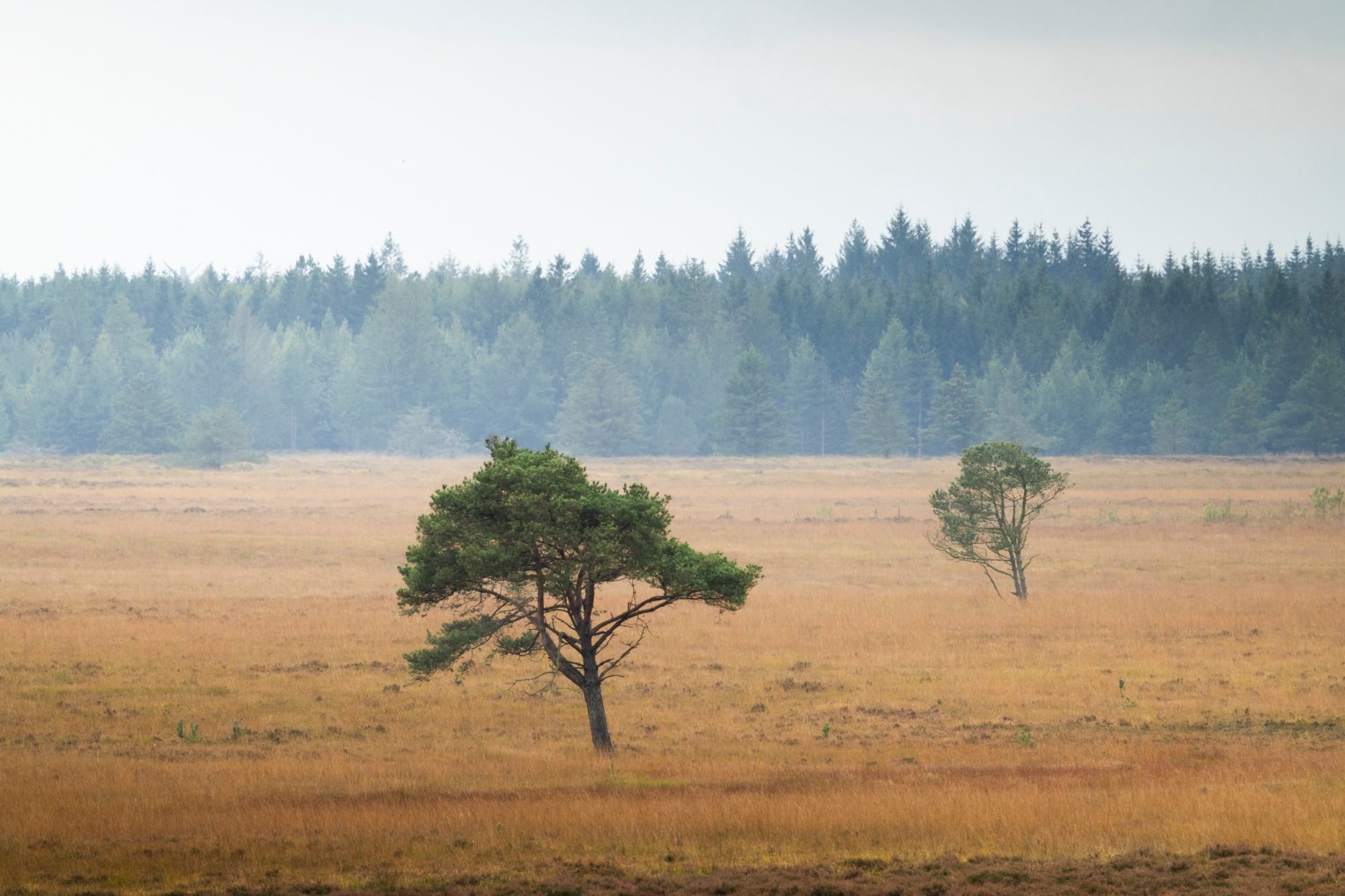
Lone pines on the Randbøl Hede, the sandy plain that the meltwater left behind.
The lakes that come and go
My first stop, straight after landing in Billund, was Frederikshåb Plantage near Vejle. The plantation dates from 1802 and lies on the Randbøl Hede, with inland dunes of up to 15 metres high. Its secret lies in the Syvårssøerne, the ‘seven-year lakes’. They rise and fall with the groundwater: one year you will find a lake, the next a dry savanna where you can walk on the lake bed. When I visited, the lakes were mostly dry and the heath was glowing in autumn colours. A wonderful start to the trip!
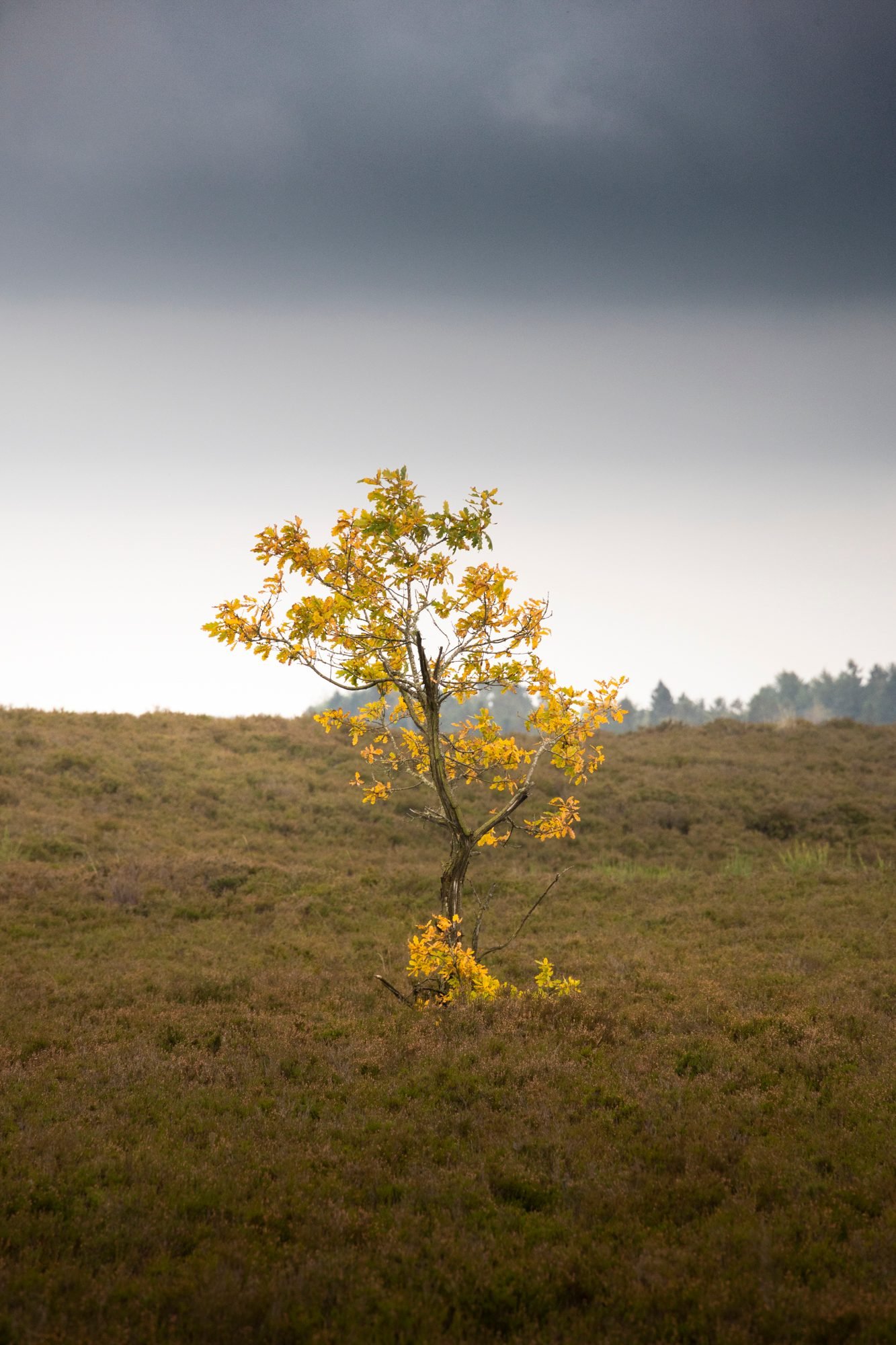
A single tree turned golden on the heath of Frederikshåb Plantage.
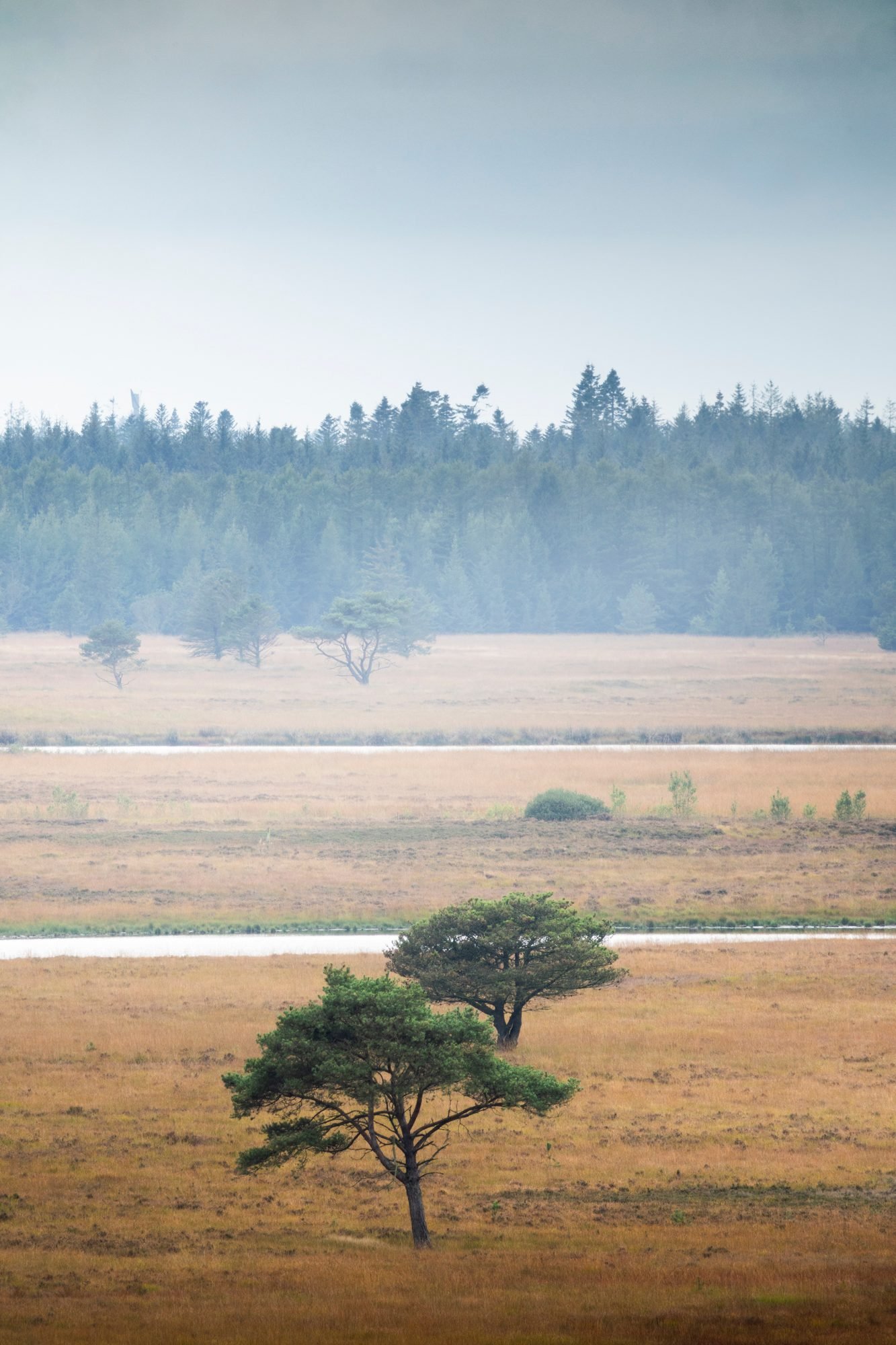
Autumn colours on the heath, while the sky stayed soft and grey, just the way I like it.
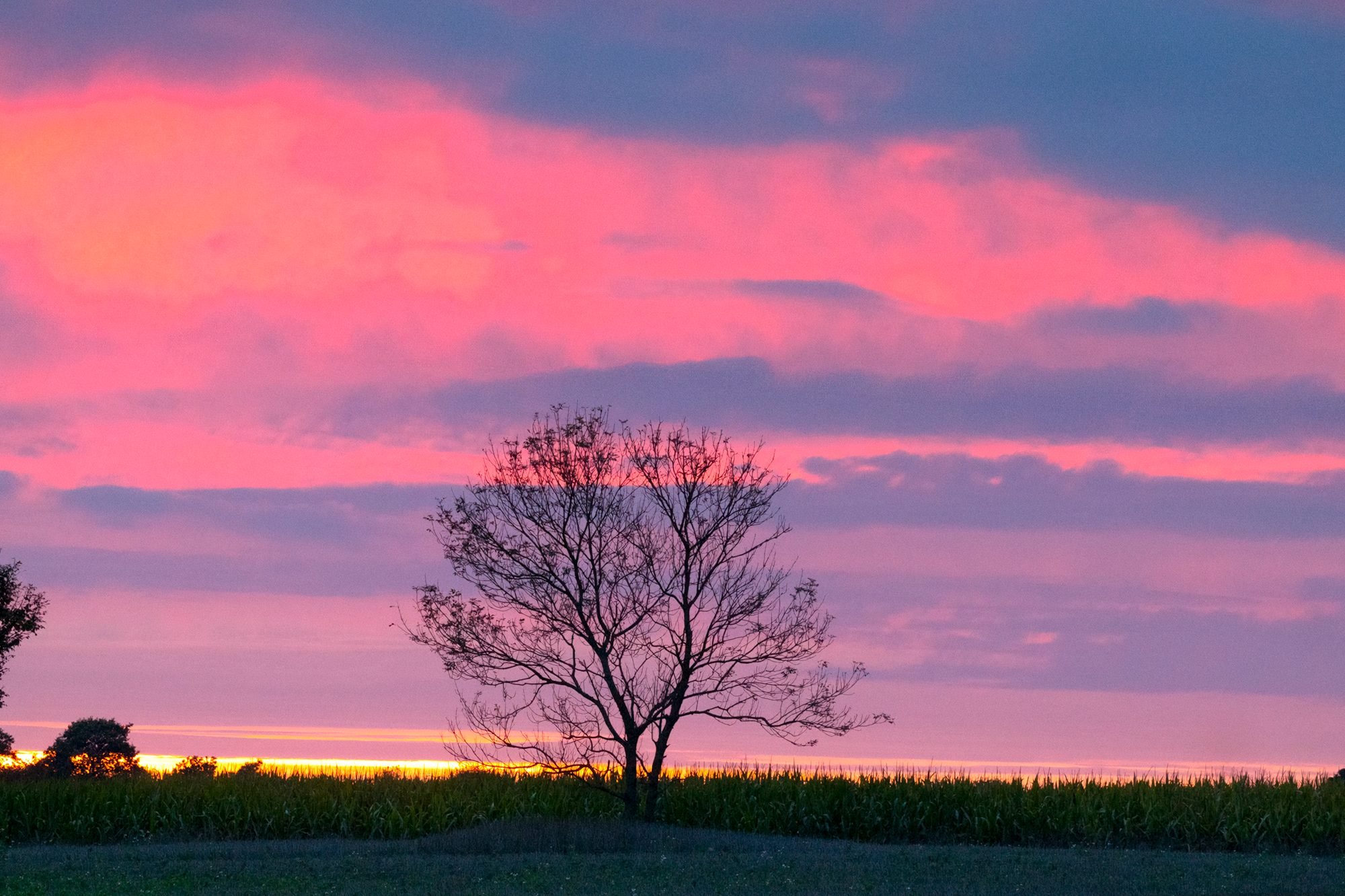
The sky turned pink after sunset. A perfect ending to my first day in Denmark.
Along Horsens Fjord
On day two, I headed to Horsens Fjord in Kystlandet. The fjord is one of those valleys shaped by meltwater under the ice, later flooded by the sea. From Husodde Strand, you can take beautiful walks along the coast, as part of Fjordmino, a hiking route all around the fjord. Right next to the beach lies a campsite, the perfect base if you are looking for real peace and quiet. It is a lovely spot for families too: walk along the water, or go crabbing and catch shrimp with the kids. The light was grey and soft that morning, and with the boulders along the shore, it felt like a minimalist painting.
Region: Destination Kystlandet
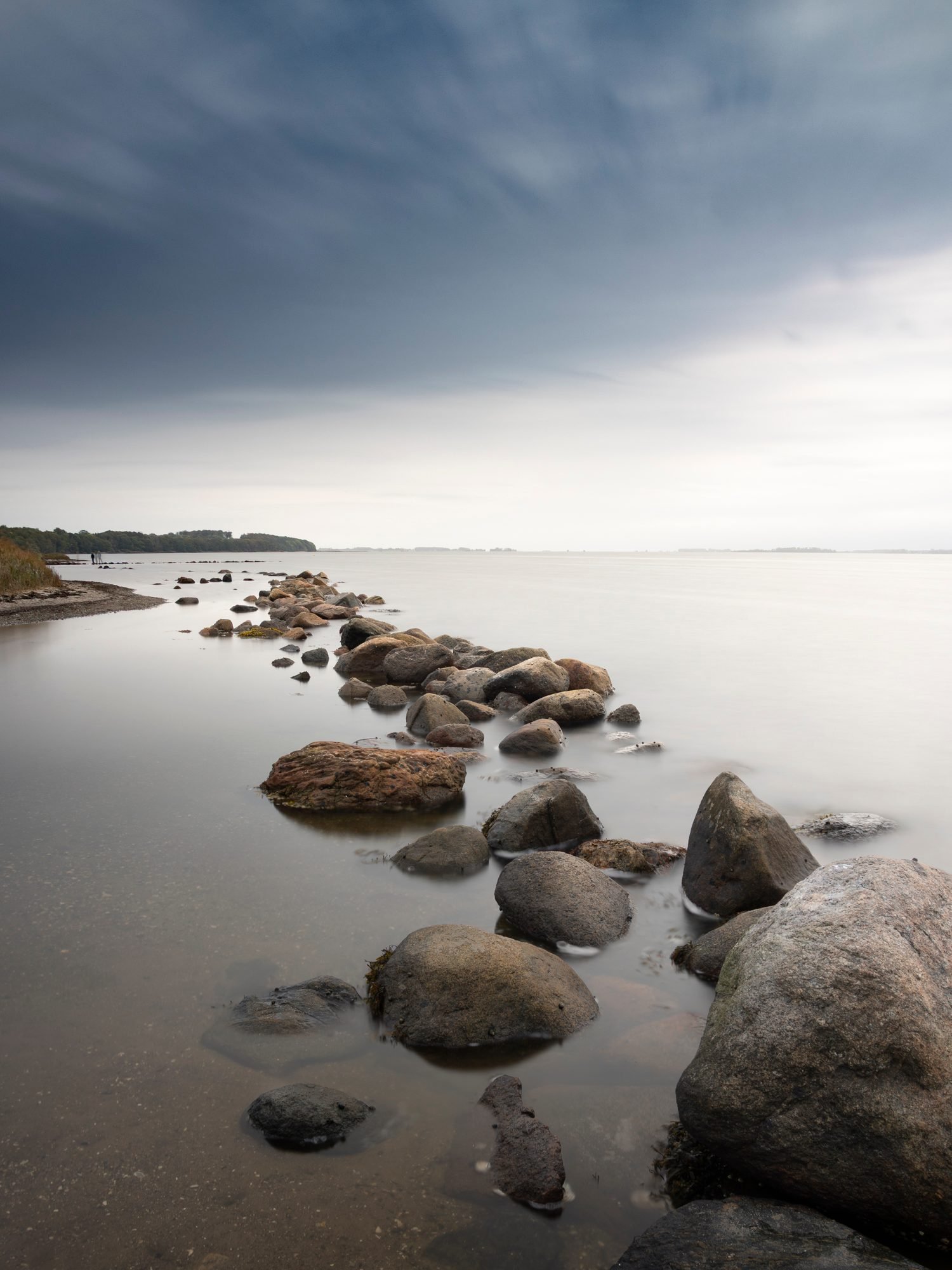
Boulders along the shore of Husodde, left behind by the ice and polished by the sea.
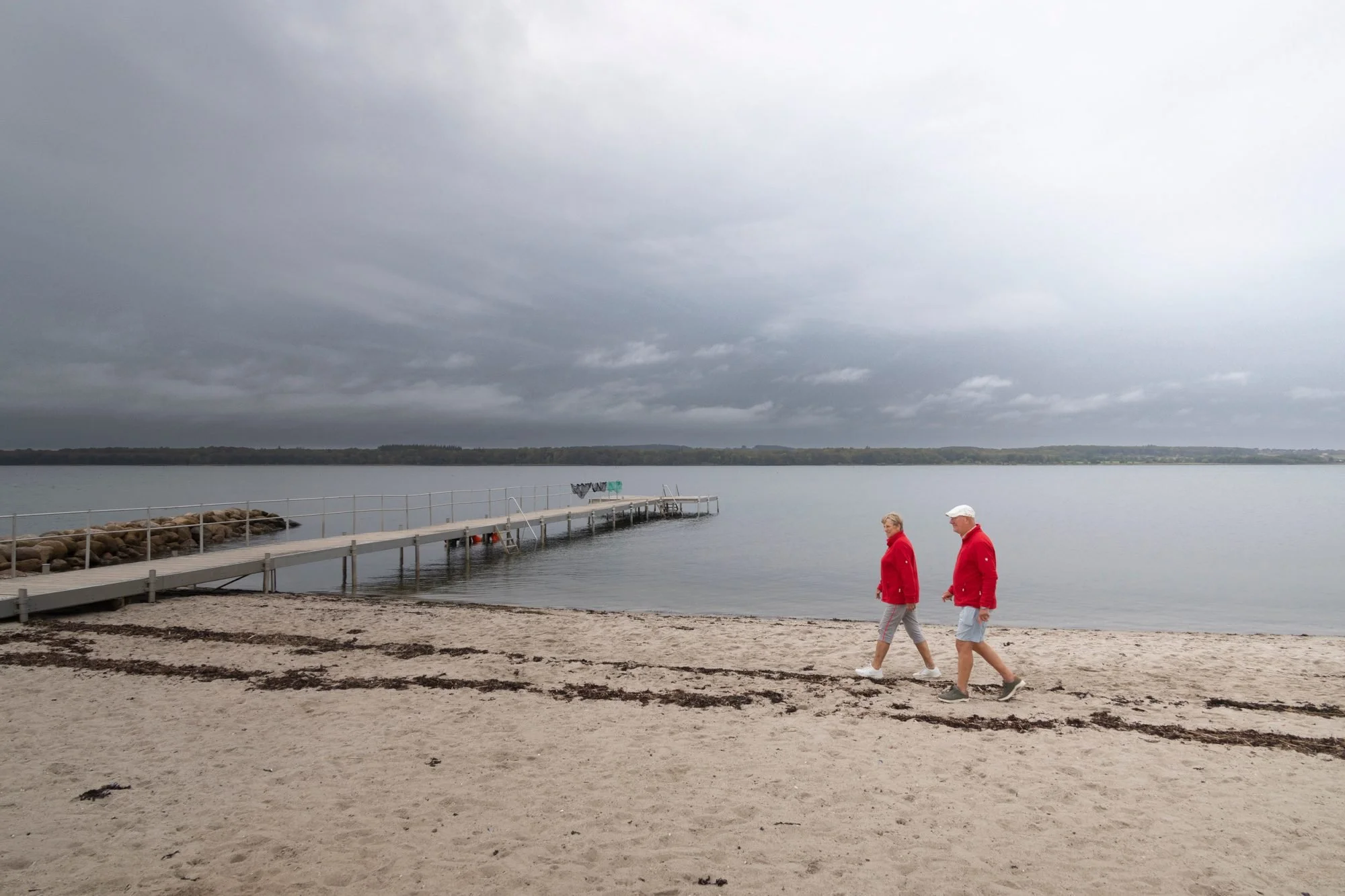
Two walkers in red, a lovely contrast on a quiet grey morning along the fjord.
Vejle and a lighthouse at golden hour
Vejle lies at the end of Vejle Fjord and is a great base to explore the area. I stayed at The Note, a green hotel next to the city park with fresh plants in every room. Along the harbour, you can’t miss The Wave, the striking white residential building designed by Henning Larsen Architects. In the afternoon, I drove to Hotel Vejlefjord, on the Kystlandet side of the fjord. From its park, a forest path leads to Træskohage Fyr. The small lighthouse dates from 1904 and overlooks almost the entire fjord. I waited for golden hour and it simply didn’t disappoint!
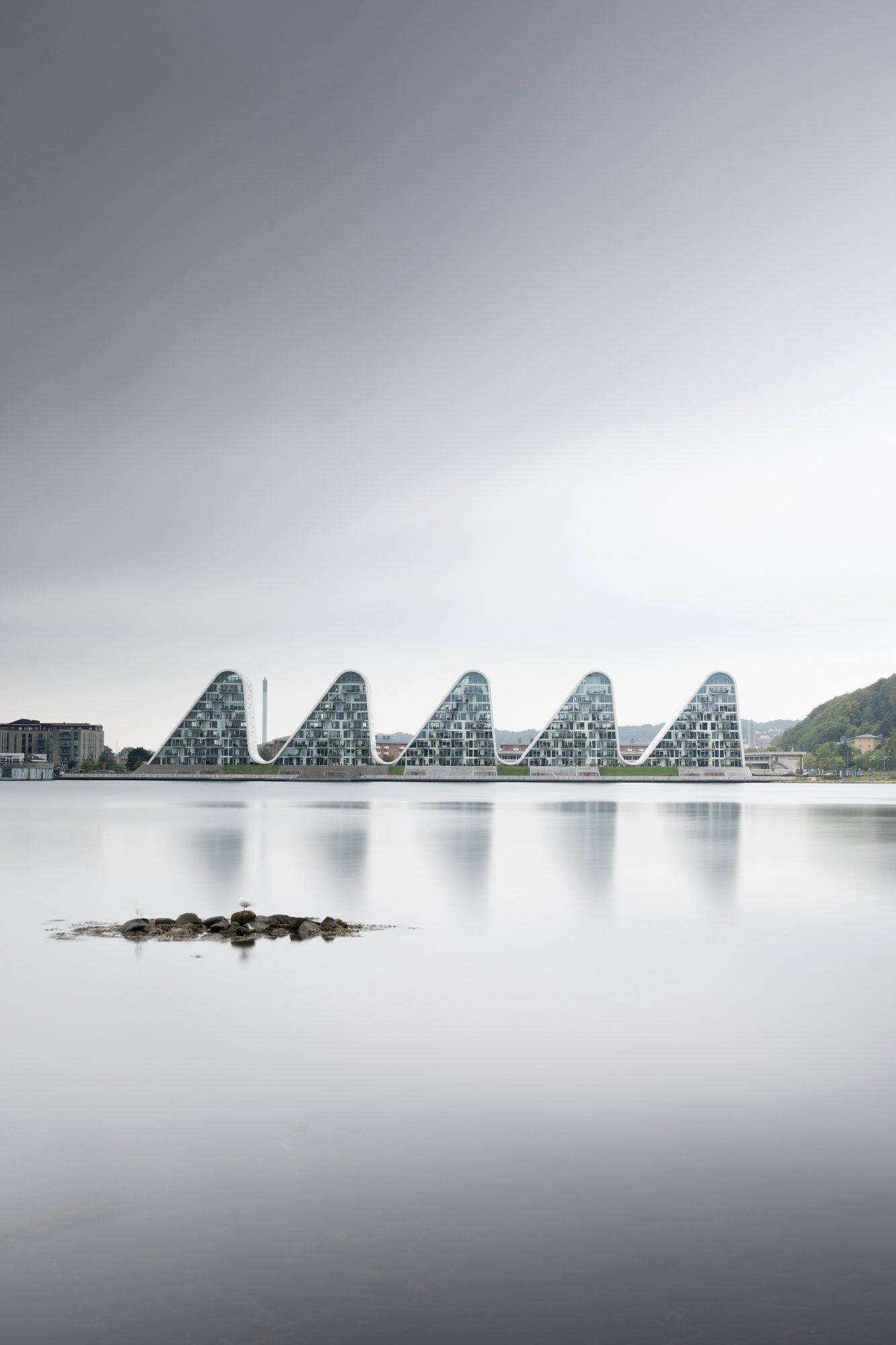
The Wave reflected in the calm water of Vejle Fjord.
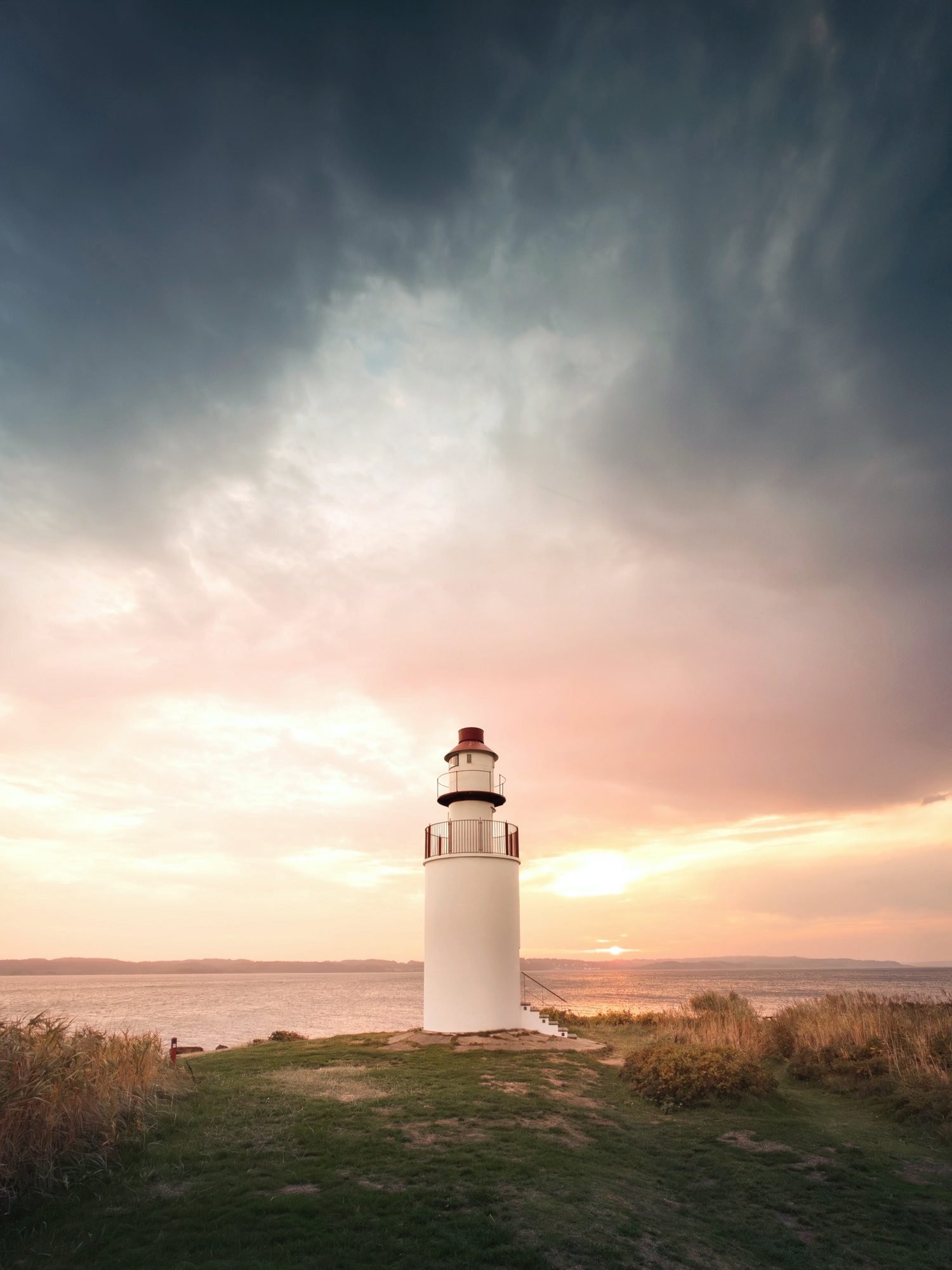
Træskohage Fyr, the small lighthouse on Vejle Fjord, in the evening light.
Uldum Kær, Denmark’s largest marsh
On Wednesday morning, I started at Uldum Kær, the largest marsh in Denmark. The Gudenå, the longest river in Denmark, flows right through it. It is a wide, open landscape of wet meadows, reeds and small ponds, and a beautiful place for a walk. Wooden bridges take you across the wettest parts, and from the bird towers you can look out over the whole area.
My tip: go early in the morning, preferably later in autumn. On cool, calm mornings, the mist hangs low over the fields and the birds slowly wake up around you. That is when the marsh feels most mysterious, and for me the best moment to take photos. Uldum Kær is open all year and free to visit.
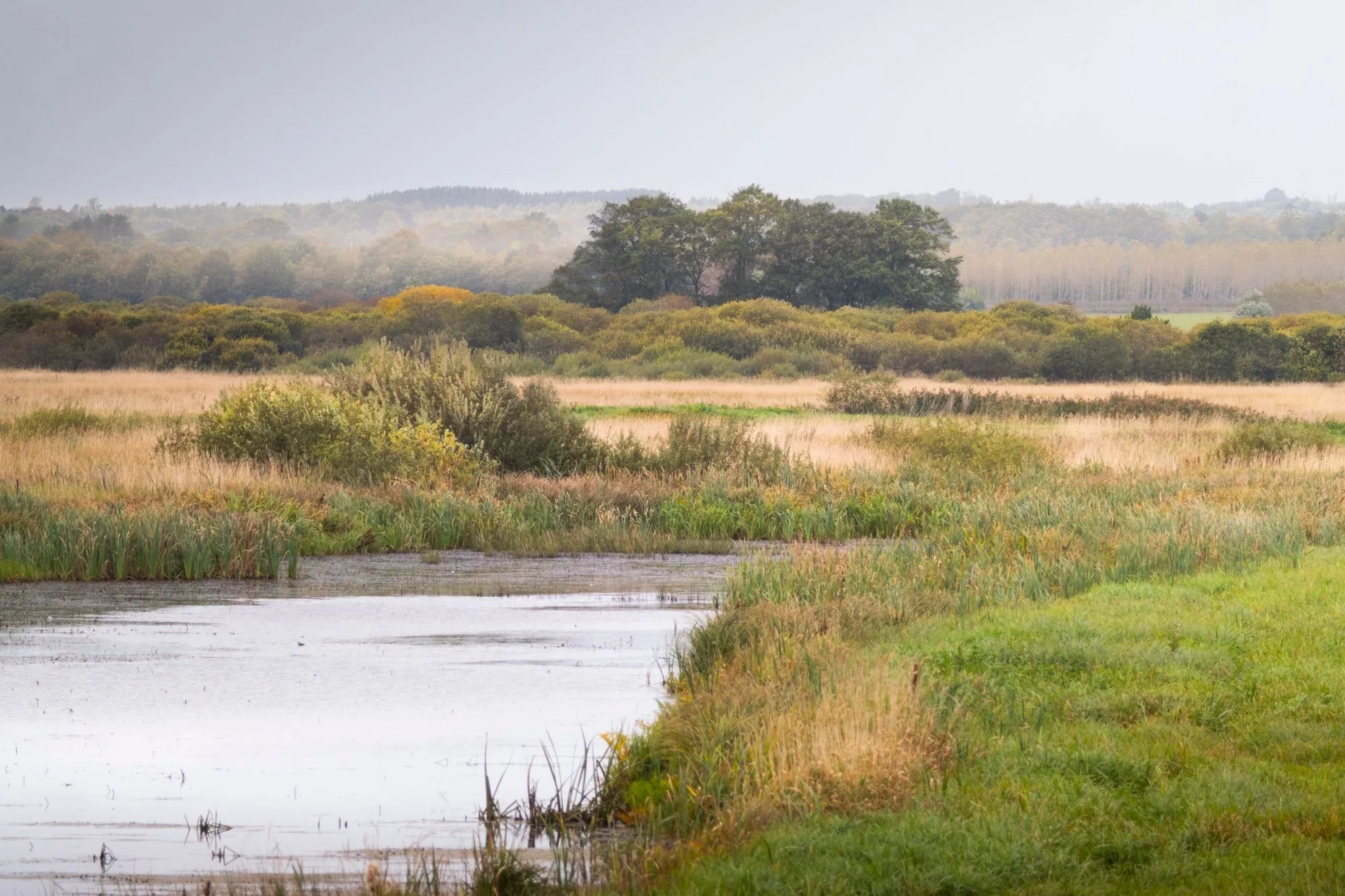
Soft mist over the wetland of Uldum Kær, Denmark’s largest marsh.
Kings and runestones in Jelling
Later that day, I travelled back in time. Kongernes Jelling is one of the most important historical sites in Denmark and a UNESCO World Heritage Site. Here, the Viking kings Gorm the Old and his son Harald Bluetooth left their mark in the 10th century. Two enormous burial mounds, a white church and two runestones tell the story of how Denmark became a Christian kingdom. The larger stone, raised by Harald Bluetooth, is often called Denmark’s birth certificate. Around the site, white pillars mark the outline of a huge Viking palisade. The graphic lines and the bright autumn sky made it a true playground for a photographer (and graphic designer like me ;).
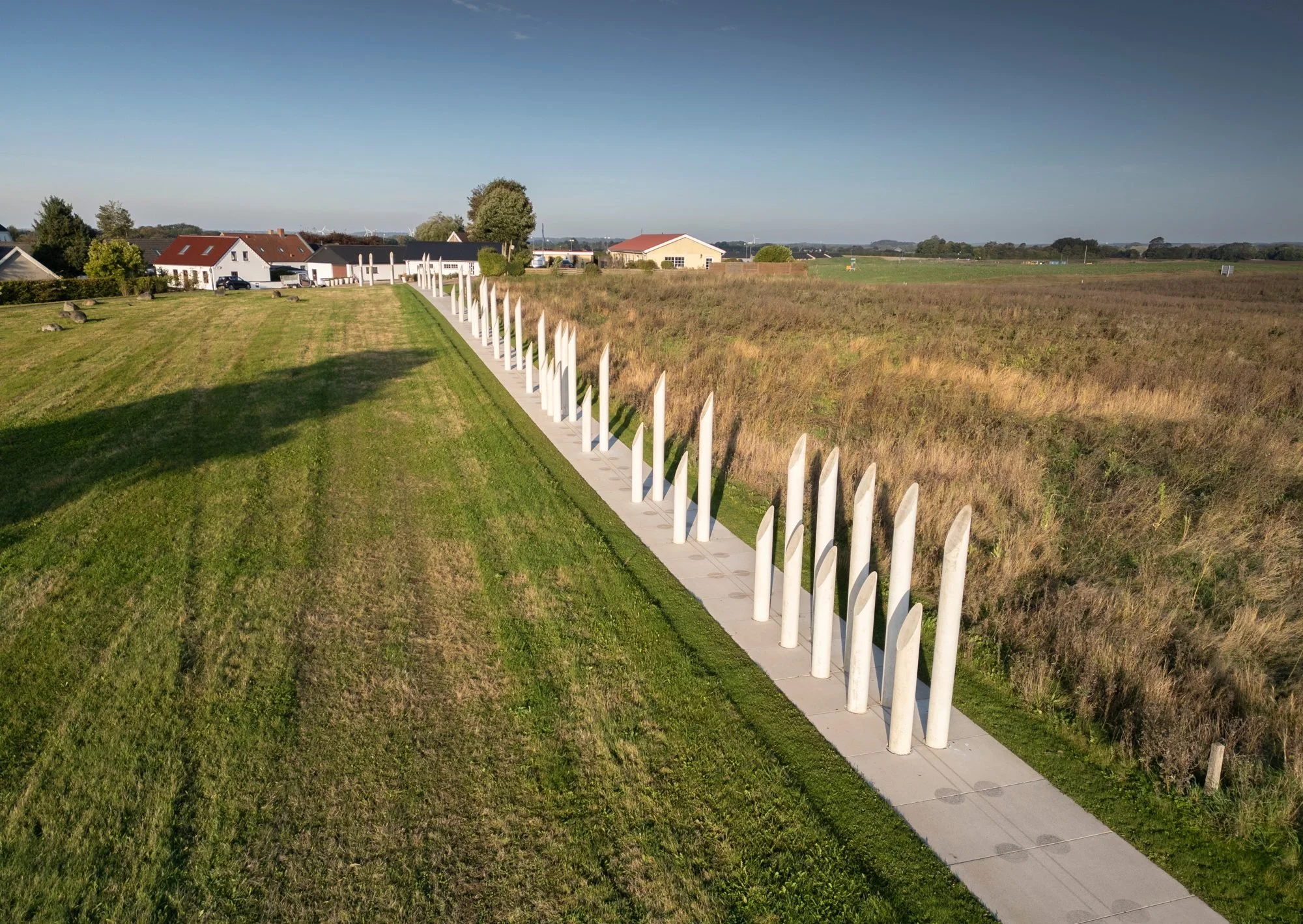
Seen from above, the white pillars reveal the impressive scale of the palisade that once surrounded the site.
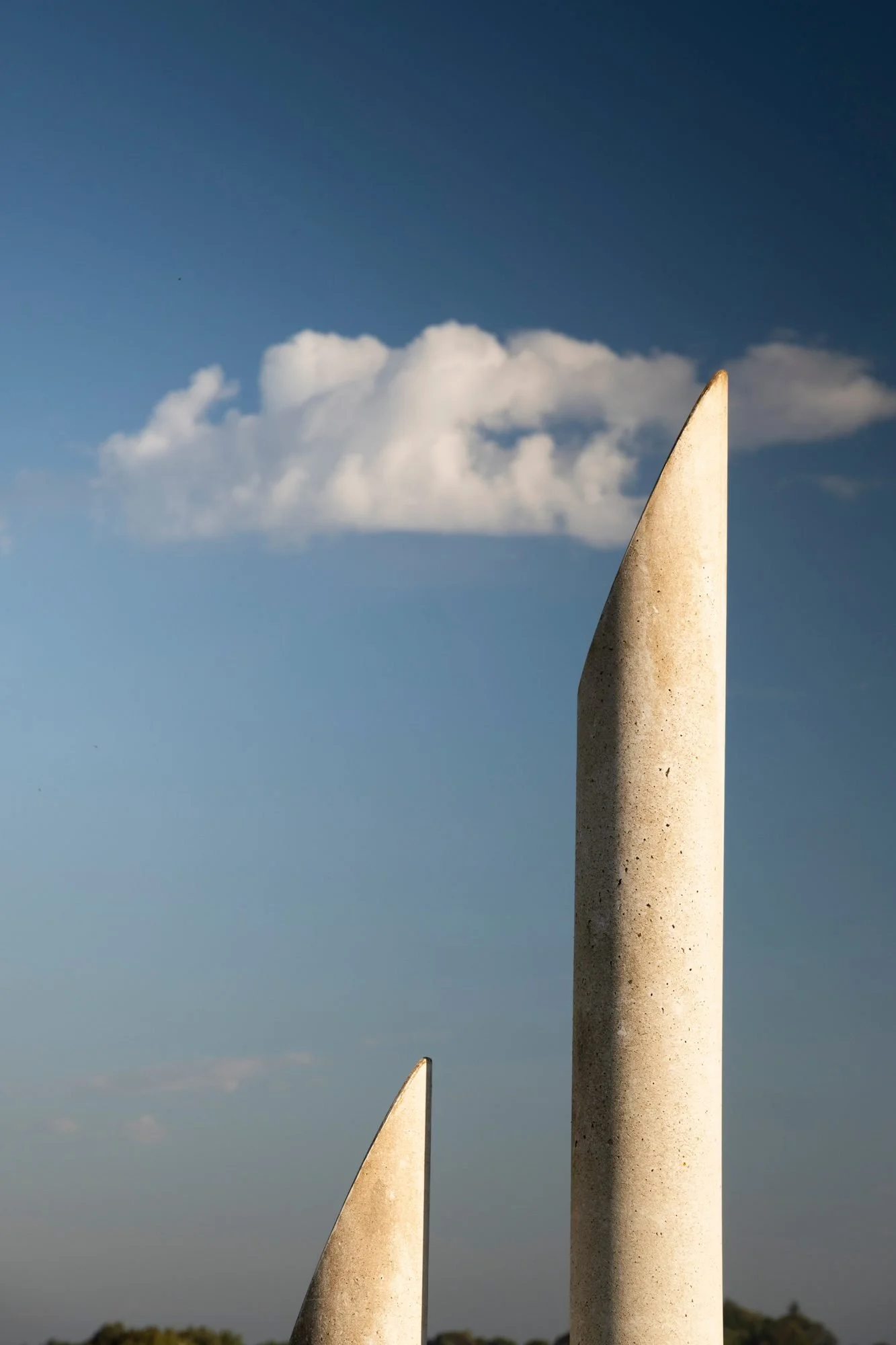
The pillars mark where the wooden palisade stood, more than a thousand years ago.
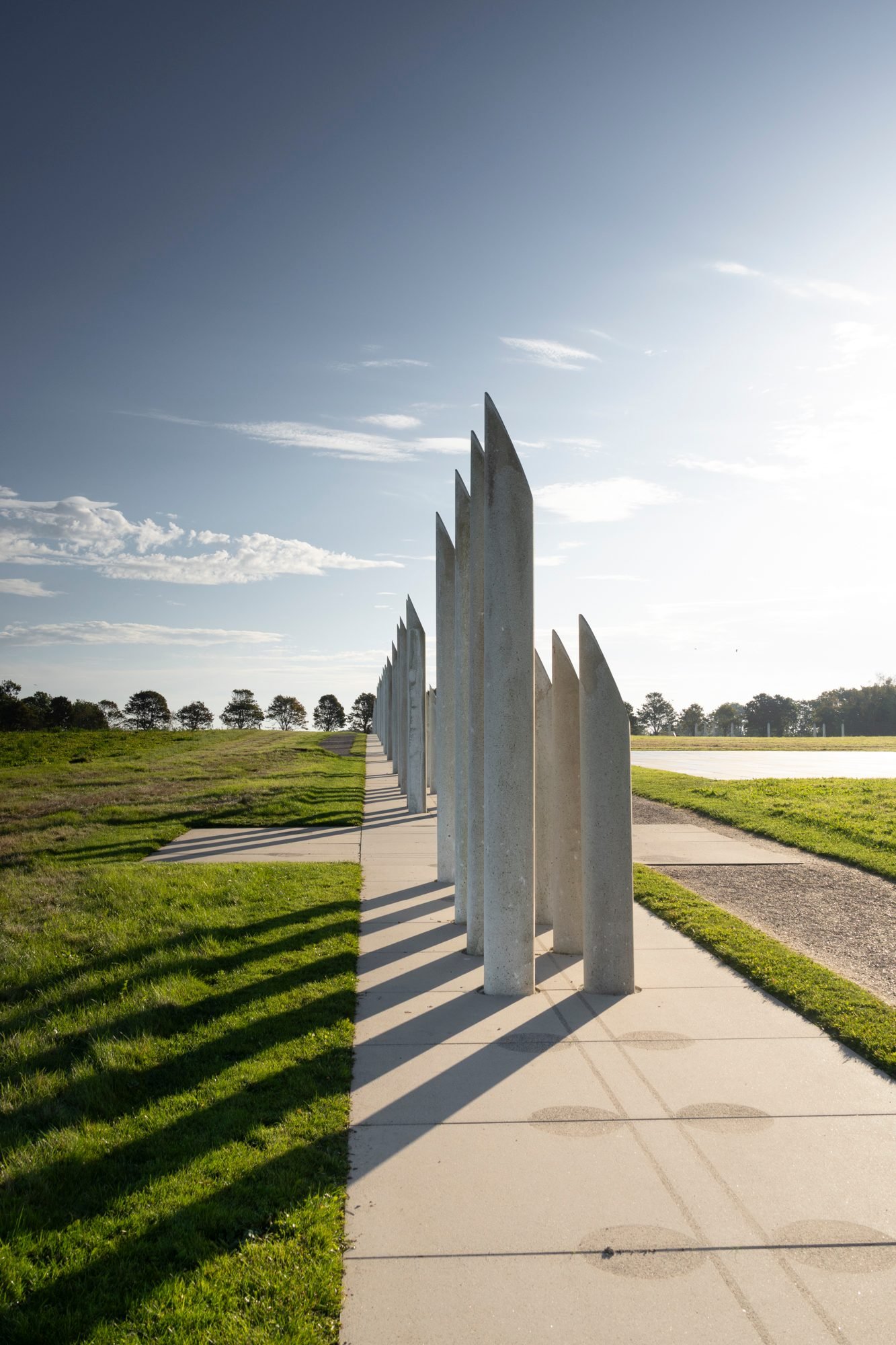
The white pillars and their shadows draw graphic lines in the autumn sun.
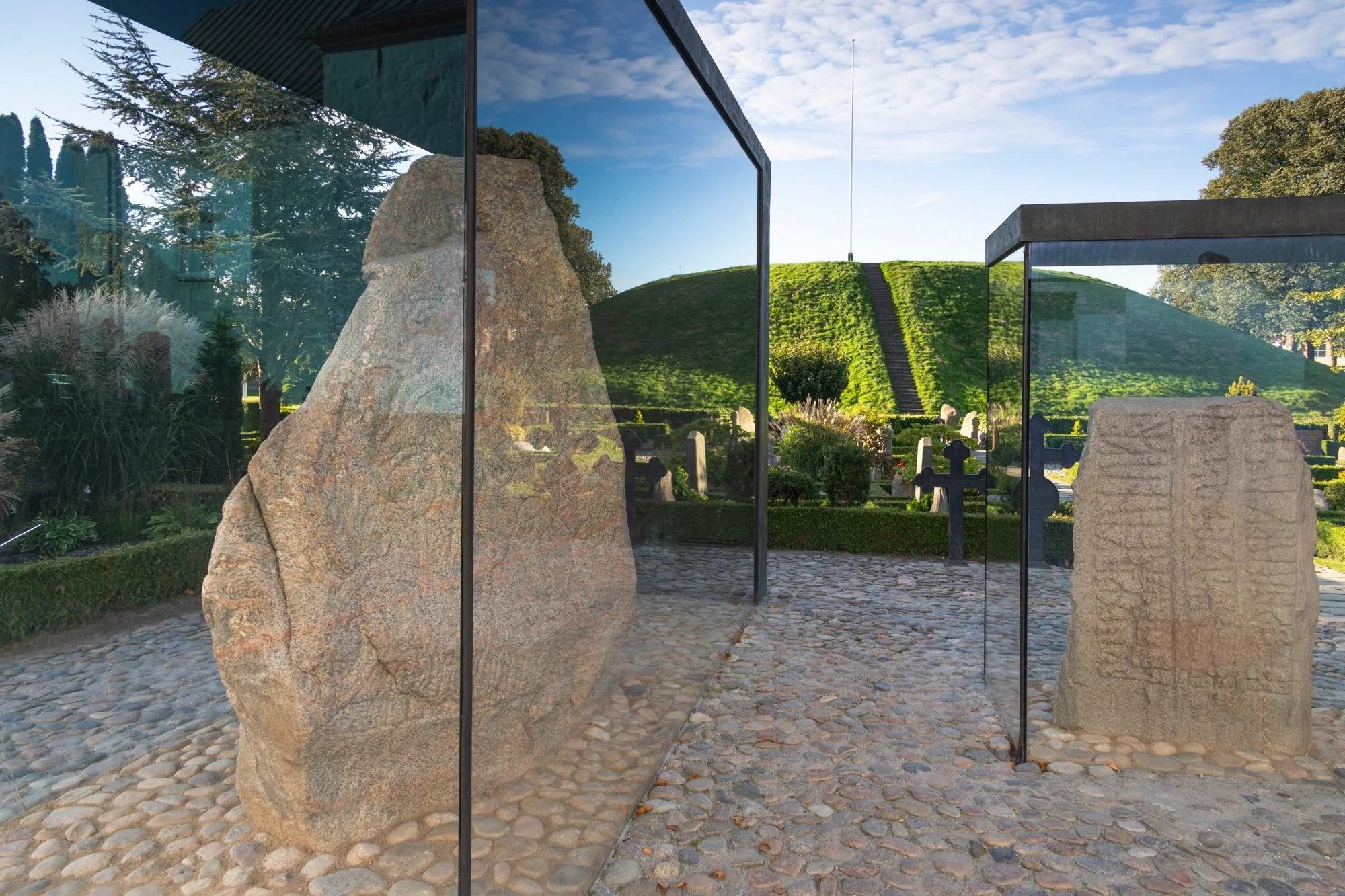
The runestones are protected in glass display cases, right next to Jelling Church. The larger one, raised by Harald Bluetooth, is known as Denmark’s birth certificate.
The valleys of Vejle Ådal
Just south of Jelling lies Vejle Ådal, a wide river valley also formed by melting ice. From the narrow ridge of Runkenbjerg, you look out over both the Vejle and the Egtved river valleys. Rolling hills, meadows, grazing horses and a winding river below: this was one of my favourite views of the trip. Nearby, at Egtvedpigens Verden, an open-air museum tells the story of the Egtved Girl, who was buried here in an oak coffin about 3,400 years ago, in the Bronze Age. The story is told through the landscape itself, with a reconstructed burial mound and paths through nature. Entrance is free.
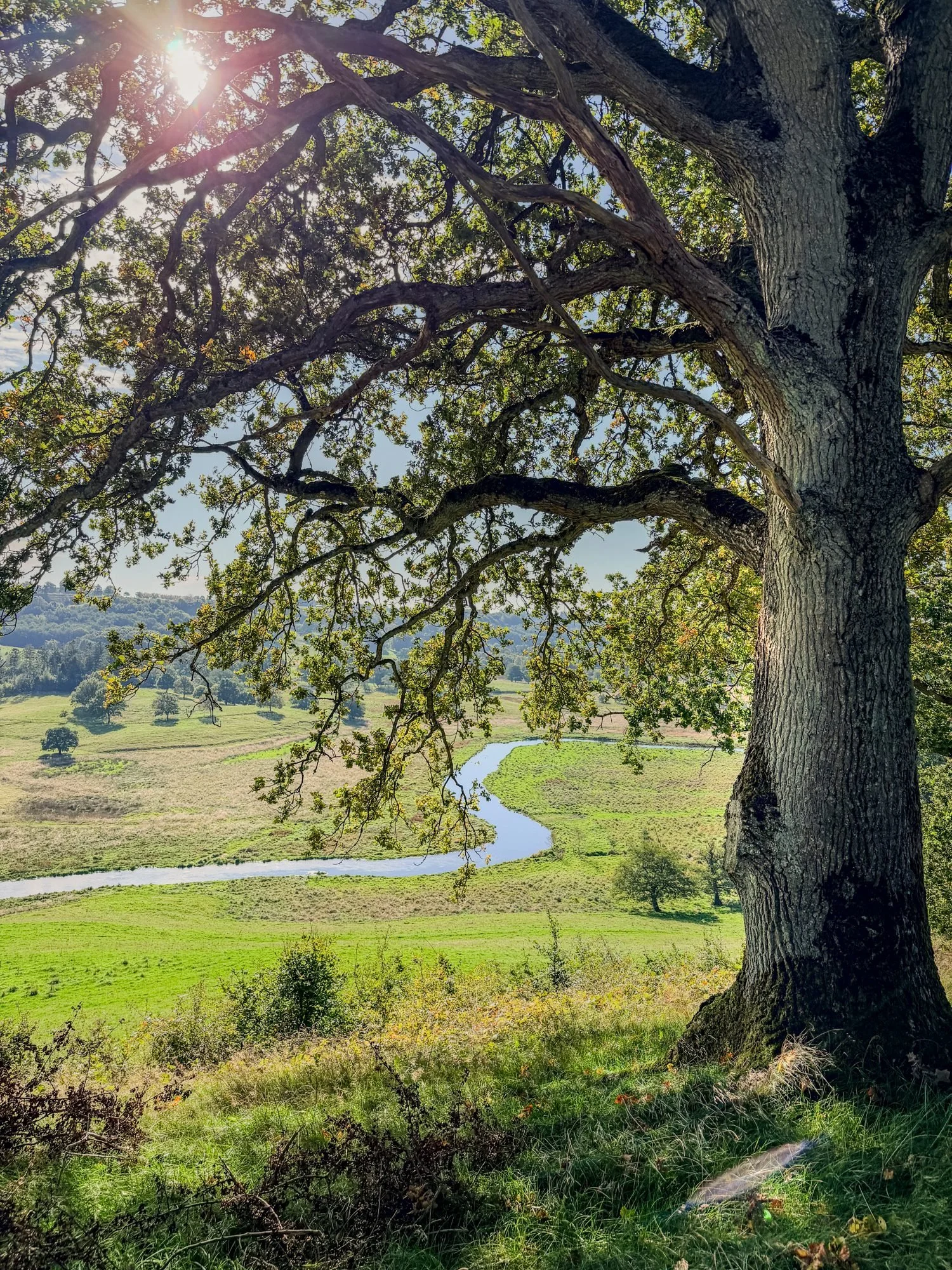
Views over Vejle Ådal, with the river winding through the valley.
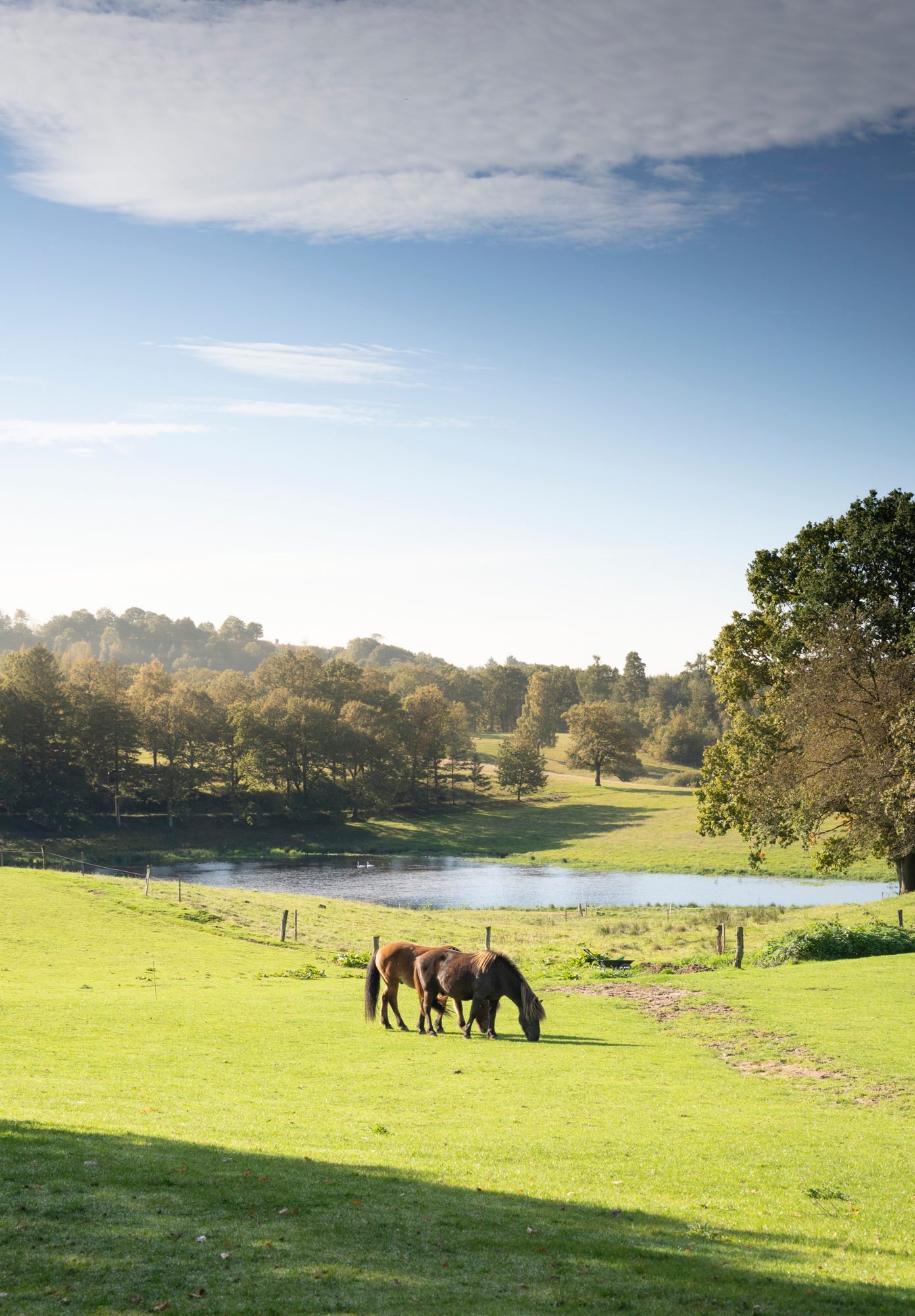
Horses grazing in the valley make this landscape feel timeless.
Sunrise over Genner Bugt
Further south, in Sønderjylland, the landscape opens up towards the Little Belt. Genner Bugt is a bay of around four kilometres wide that reaches deep into the land, with the small islands of Kalvø and Barsø nearby. I got up early for sunrise and it was worth every minute. Old jetties and wooden poles stood in perfectly still water, while cormorants rested on the posts. Later that day, the ploughed hills around the bay showed the soft glacial relief so beautifully.
Region: Destination Sønderjylland
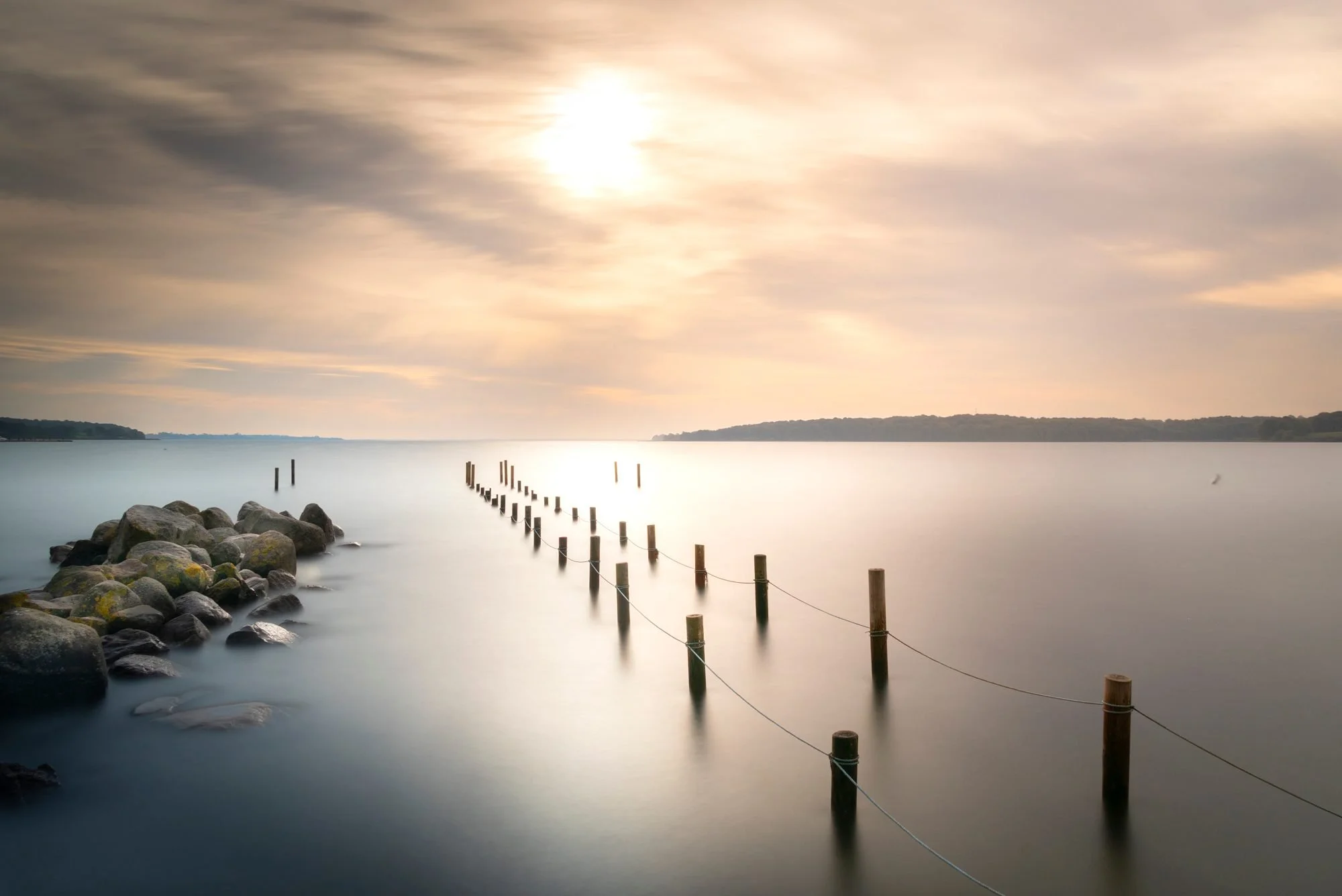
The still water of Genner Bugt made the old poles and boulders look almost weightless.
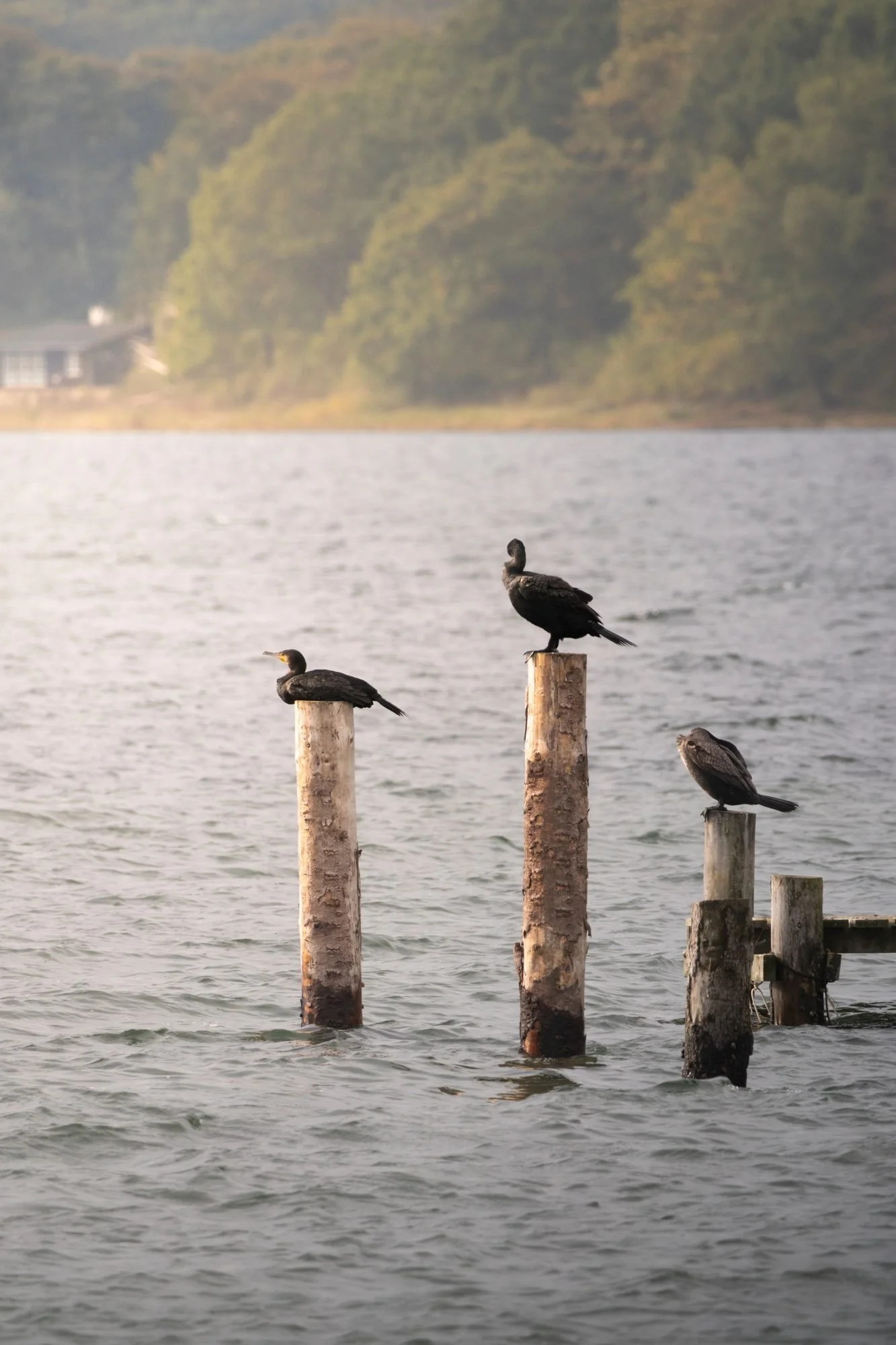
Cormorants resting on the old posts.
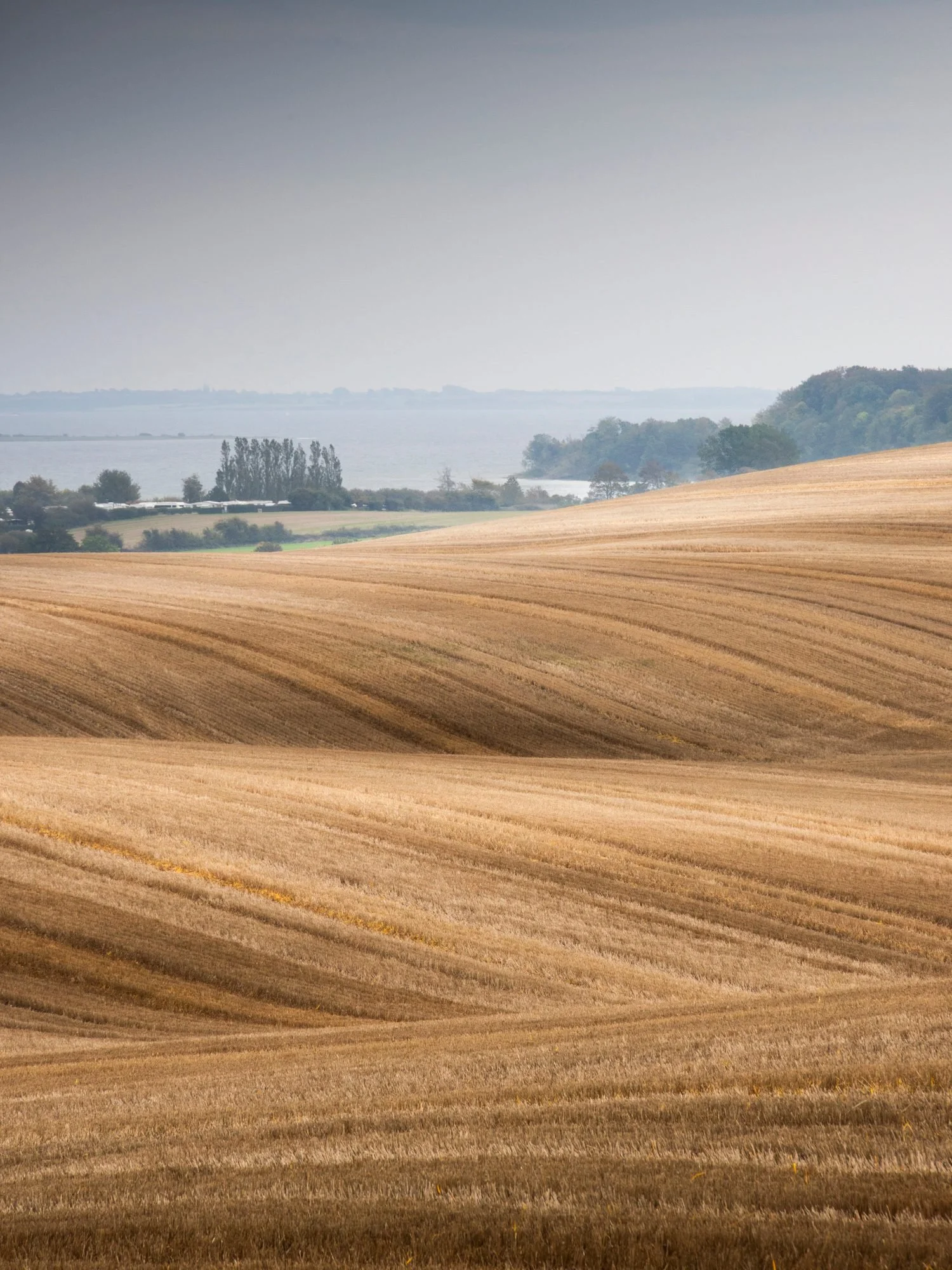
Ploughed hills around the bay, a reminder of the Ice Age landscape.
Haderslev Fjord from Starup
The next morning, I visited Starup Hede, a quiet heath with wide views over Haderslev Fjord. Like Horsens and Vejle, this fjord cuts deep into the land. On a soft, cloudy morning, with birds flying over the water and cattle grazing along the shore, it felt wonderfully peaceful.
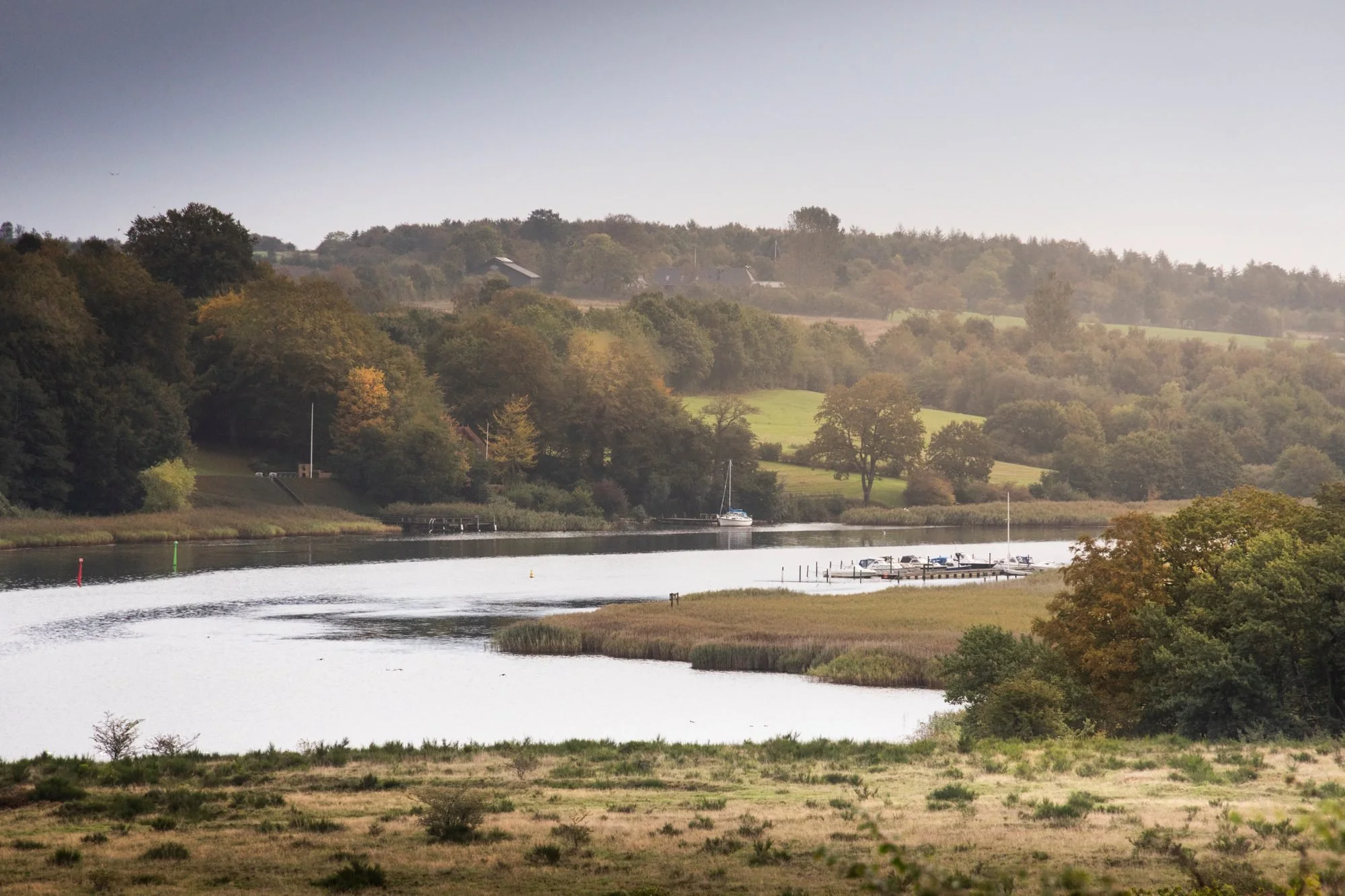
Haderslev Fjord seen from Starup Hede, with layers of hills fading into the distance.
Christiansfeld, the town of honey cakes
One of the most charming places of this trip was Christiansfeld. The town was founded in 1773 by the Moravian Church, a Protestant community from Herrnhut in Germany. They designed it with straight streets, a central square and simple yellow brick houses, based on ideas of equality and community. Since 2015, Christiansfeld has been a UNESCO World Heritage Site. And of course, you can’t leave without trying the famous honey cake, which has been baked here for more than two hundred years. I enjoyed mine with a coffee in the sun.
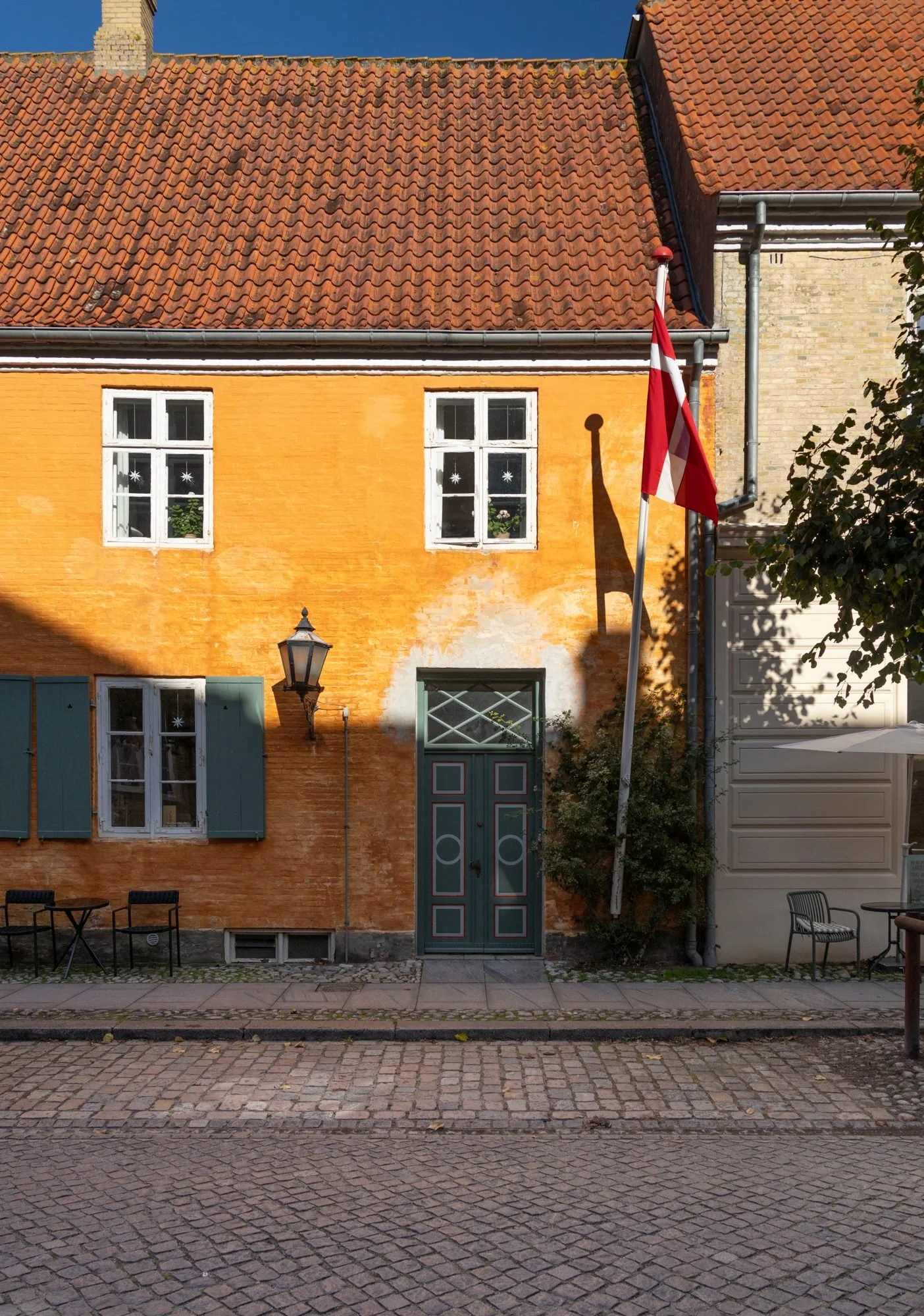
The colourful houses show the calm and orderly character of Christiansfeld.
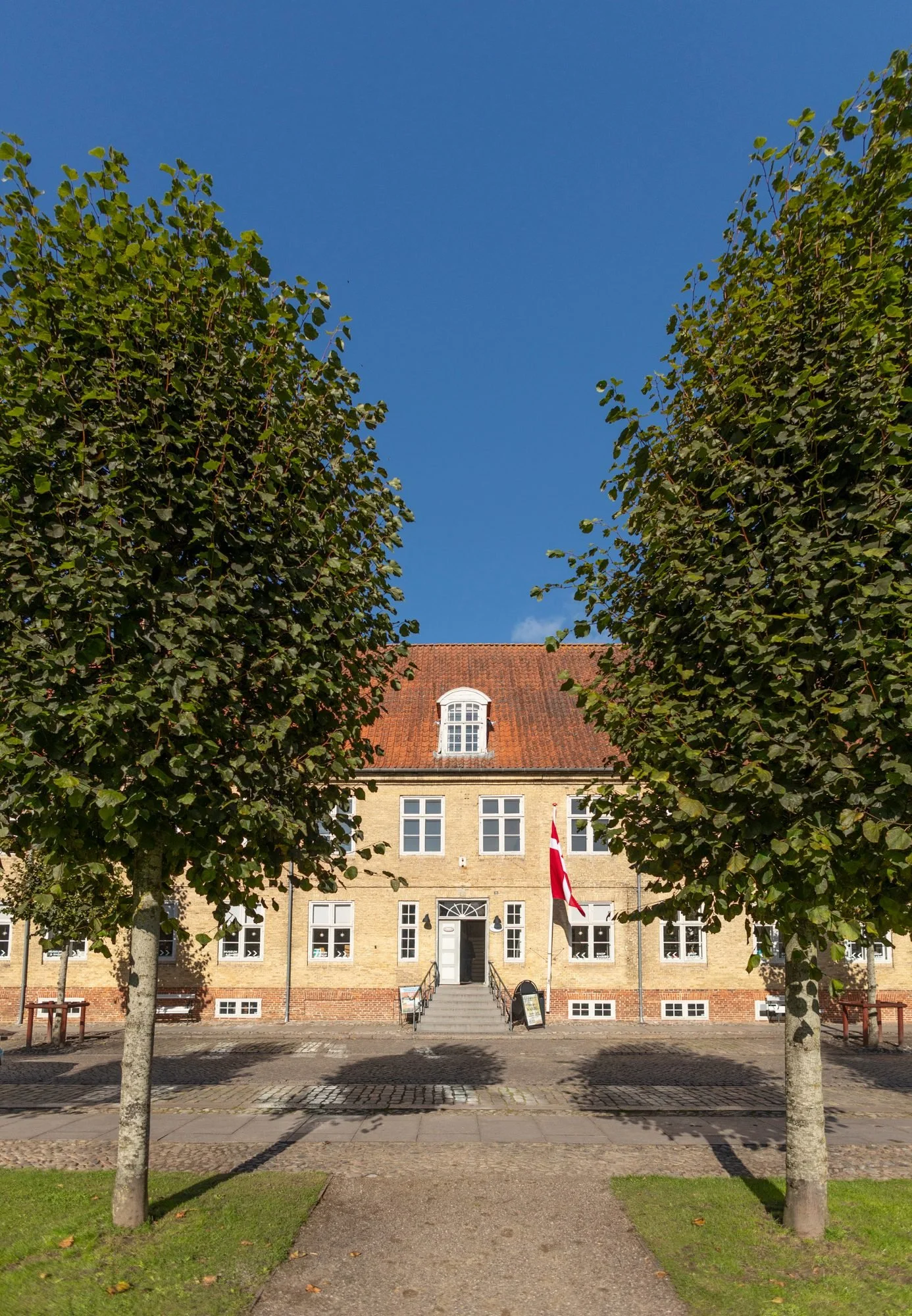
Tree-lined squares in the heart of the town.
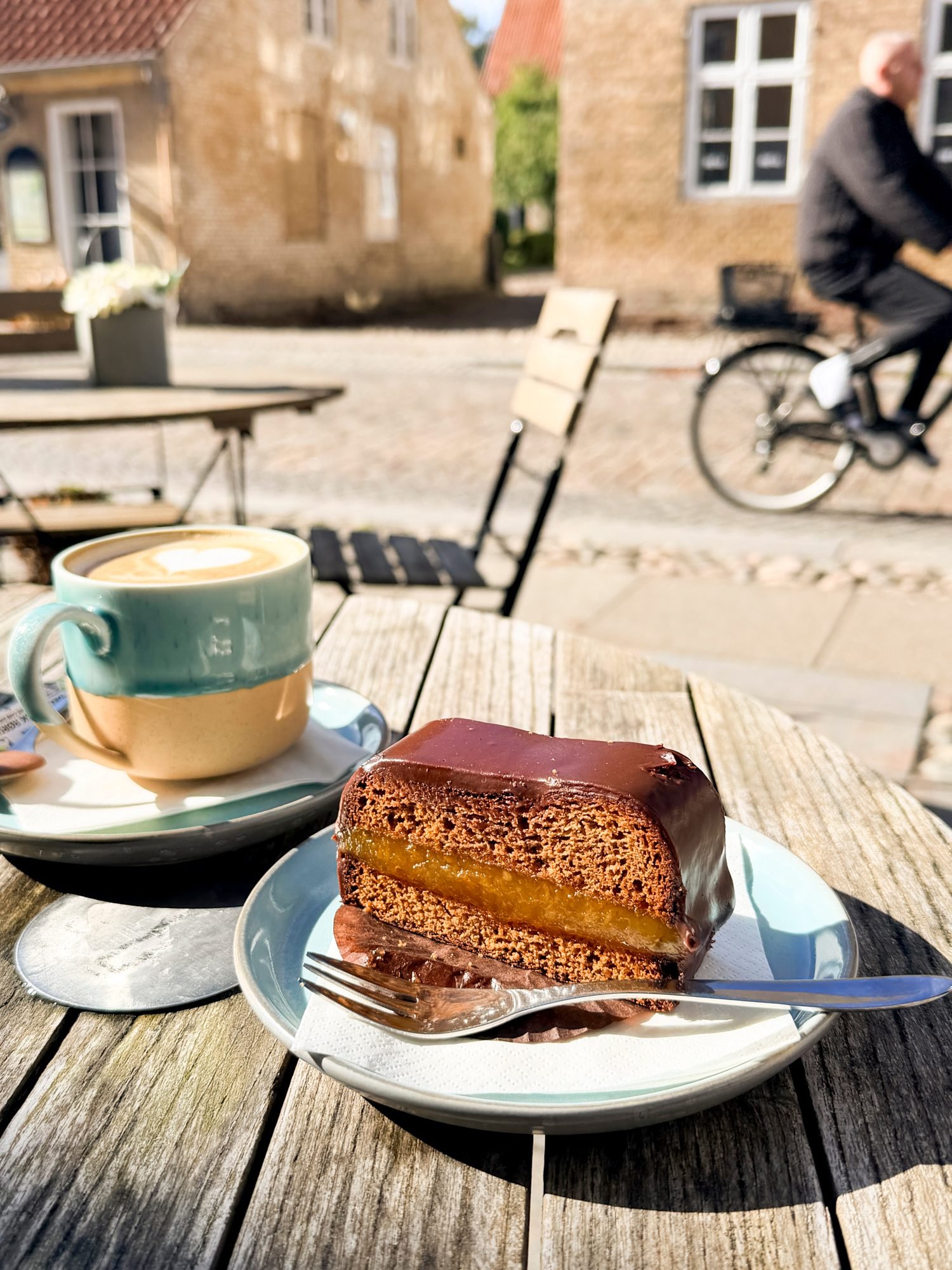
Honey cake and coffee, a must in Christiansfeld.
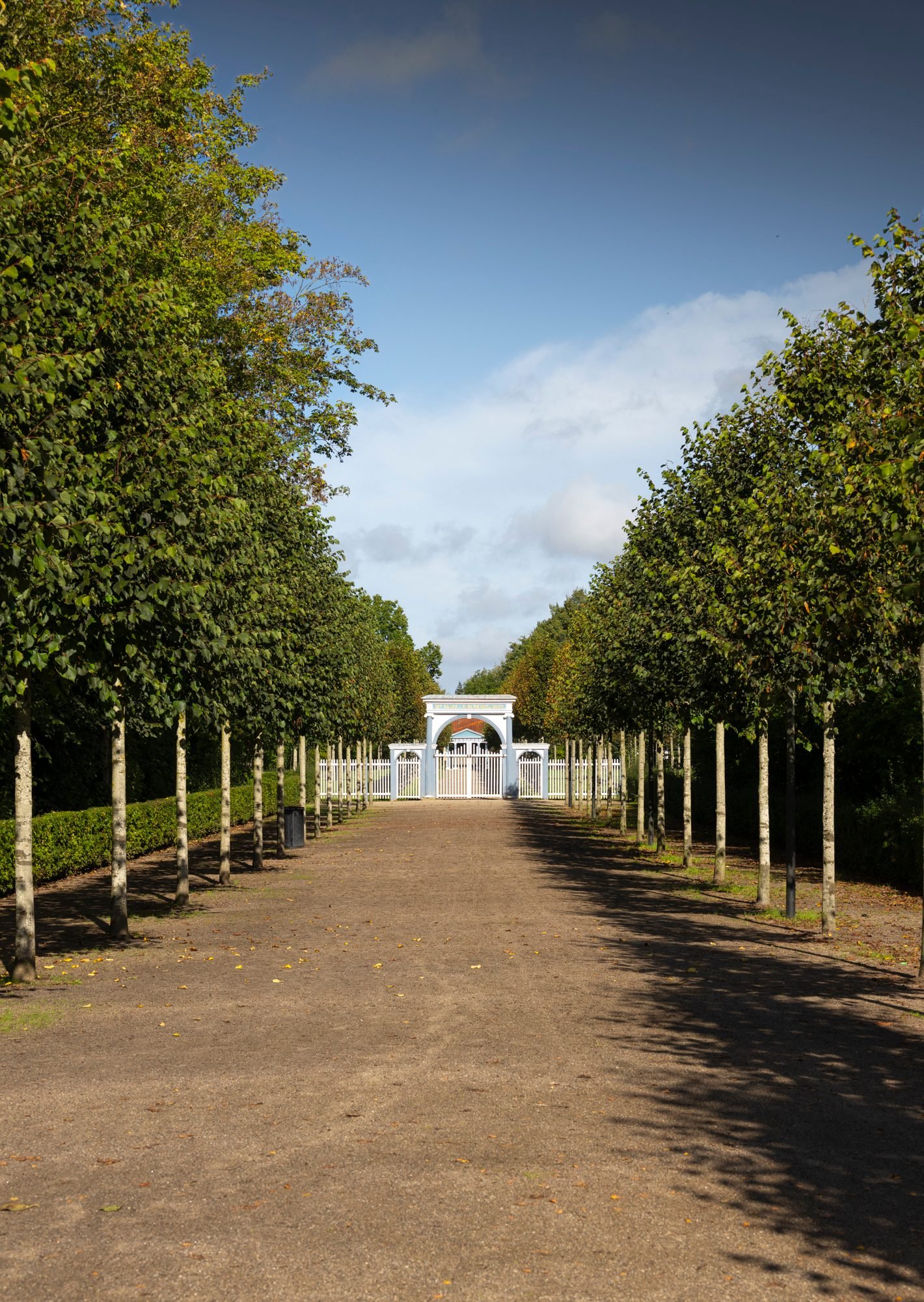
The lime tree avenue towards God’s Acre, the Moravian cemetery.
A romantic garden at Christinero
Just outside Christiansfeld, close to where I stayed at Tyrstrup Kro, lies Christinero. This romantic garden was laid out at the end of the 18th century, with old trees, small ponds and a little pavilion. It is the kind of place where you automatically slow down.
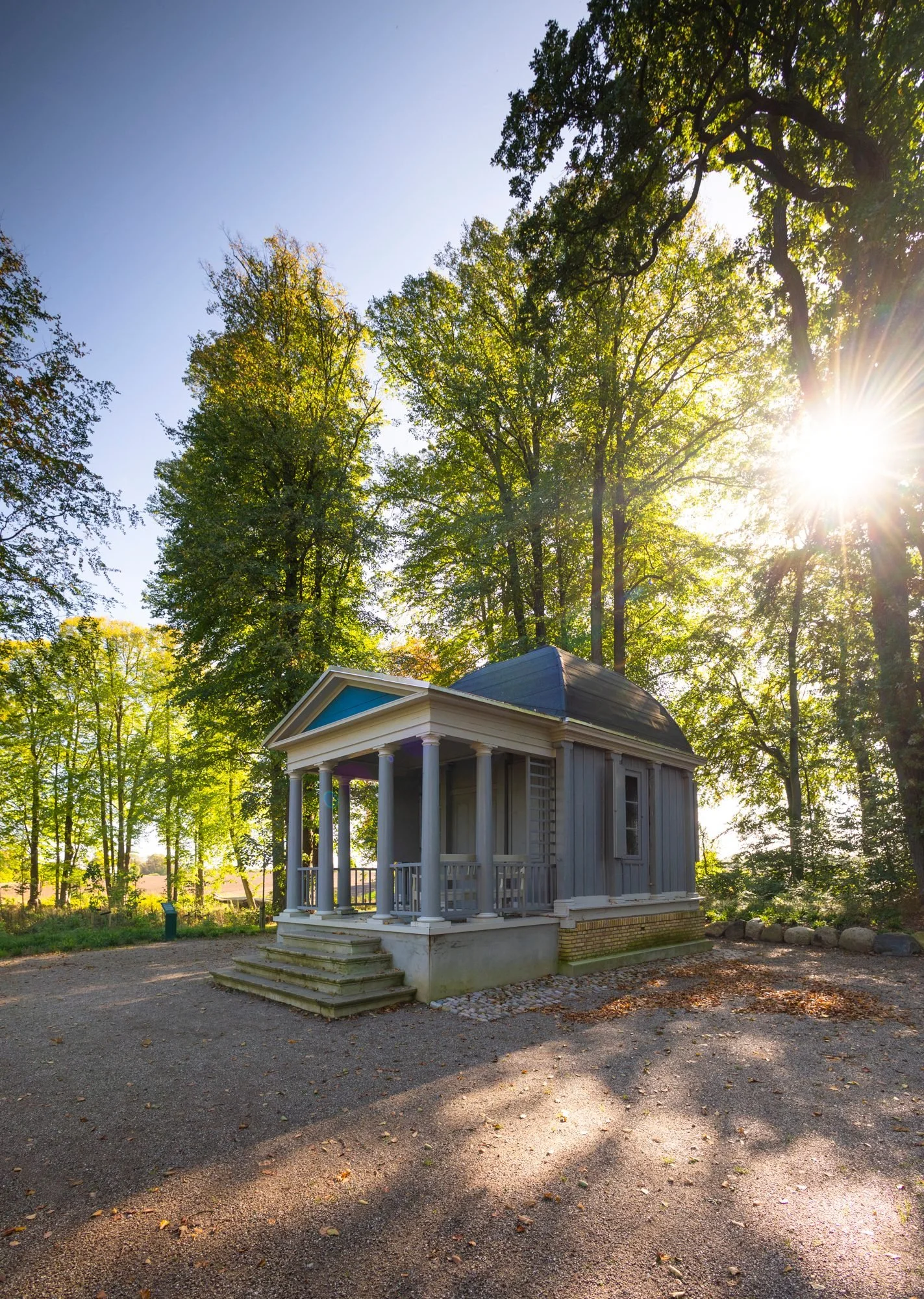
The pavilion of Christinero, peaceful in the soft afternoon light.
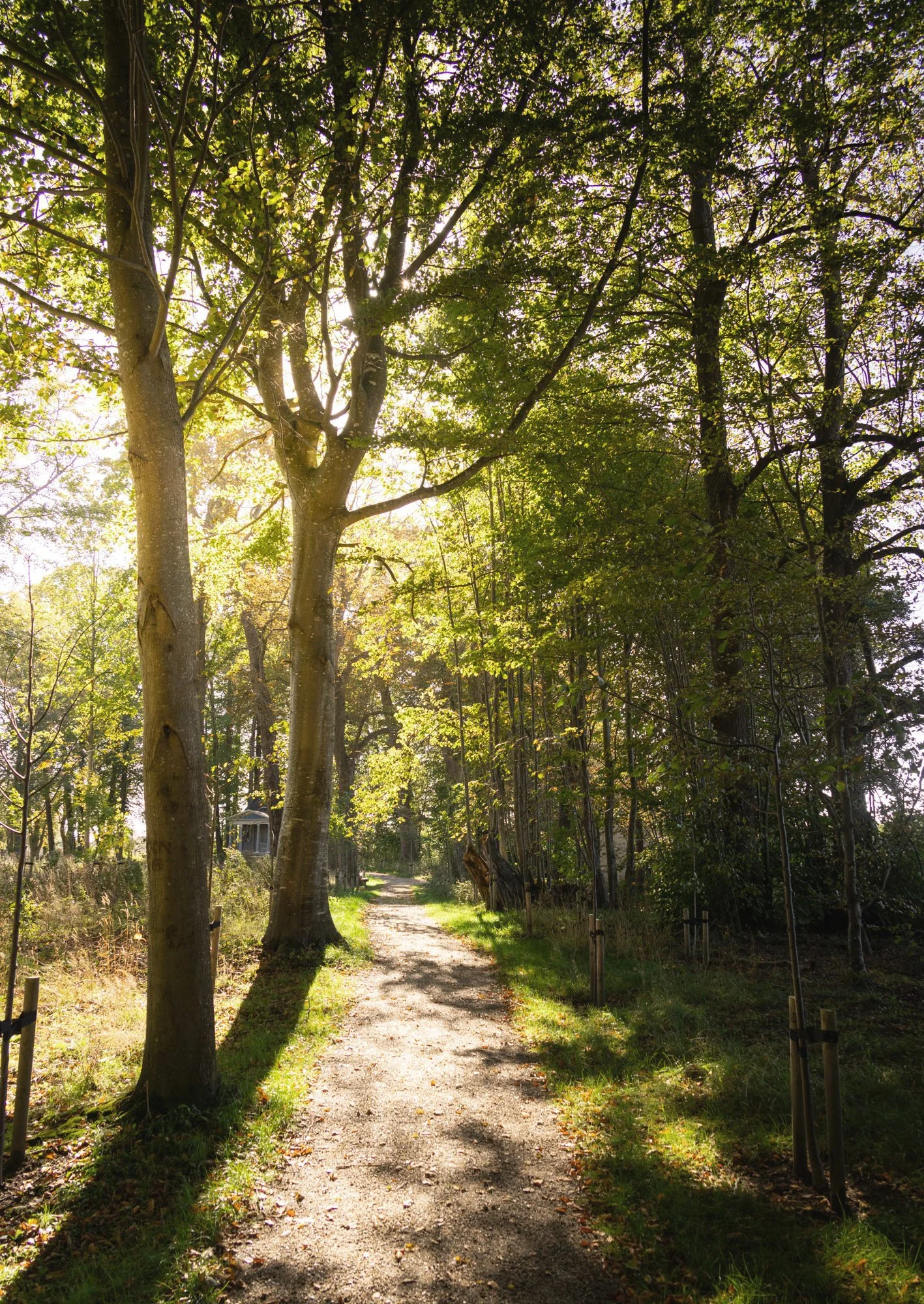
The old avenues of Christinero, a place where you automatically slow down.
Skamlingsbanken at sunset
My final highlight was Skamlingsbanken, a hilltop of 113 metres above sea level. The steep hills and deep valleys around it were shaped by the ice as well. But this place is also important for Danish history. In the 19th century, people gathered here for large meetings to celebrate the Danish language and identity in Schleswig. A tall memorial column still reminds visitors of that time. From the top, the views over the Little Belt and the rolling hills are simply breathtaking. I stayed until sunset, with cows grazing in the golden light and wind turbines fading into the haze. As a photographer and weather lover, I couldn’t have wished for anything better.
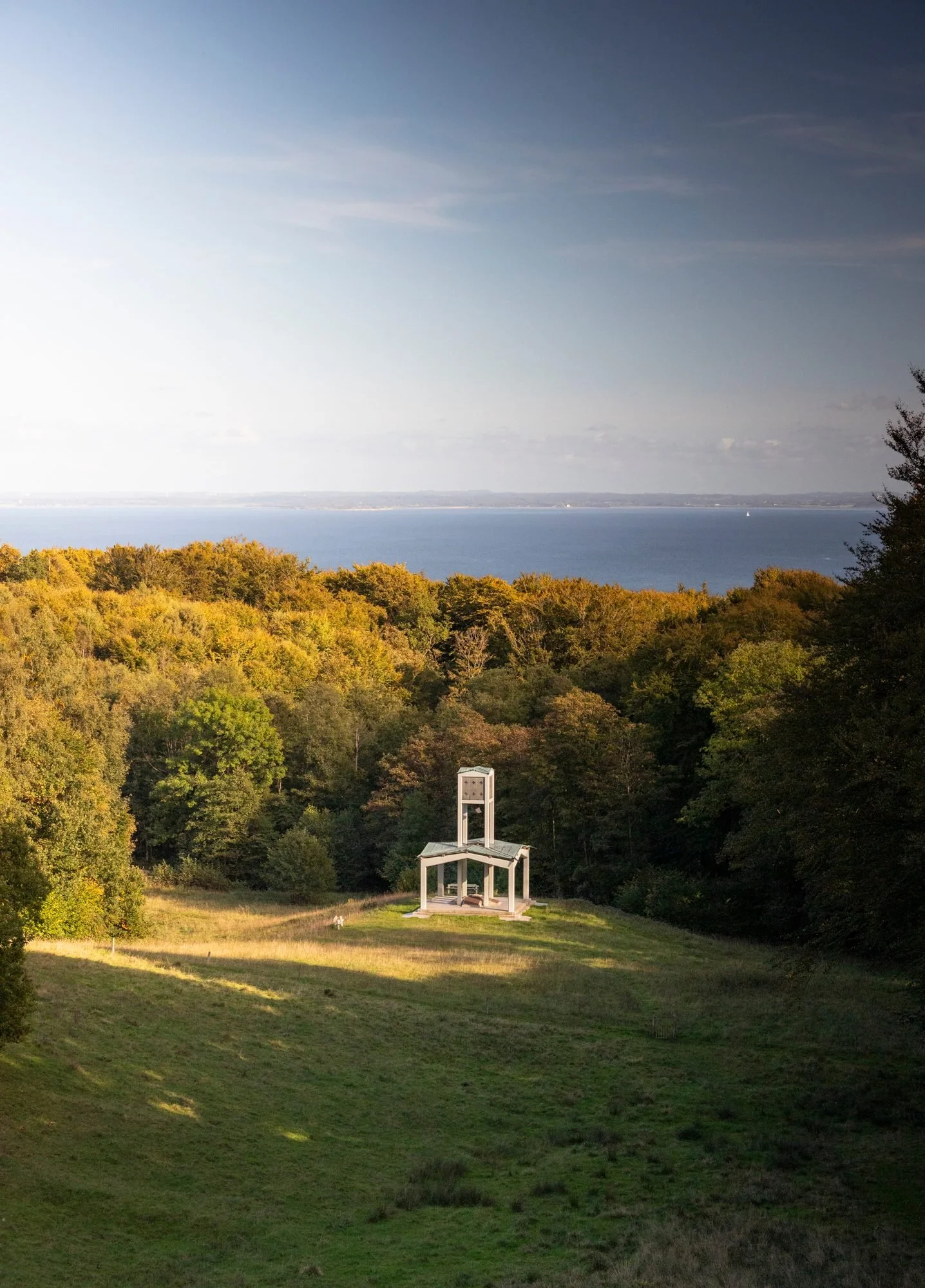
The bell tower in the valley below Skamlingsbanken, a memorial to fallen resistance fighters, with the Little Belt beyond.
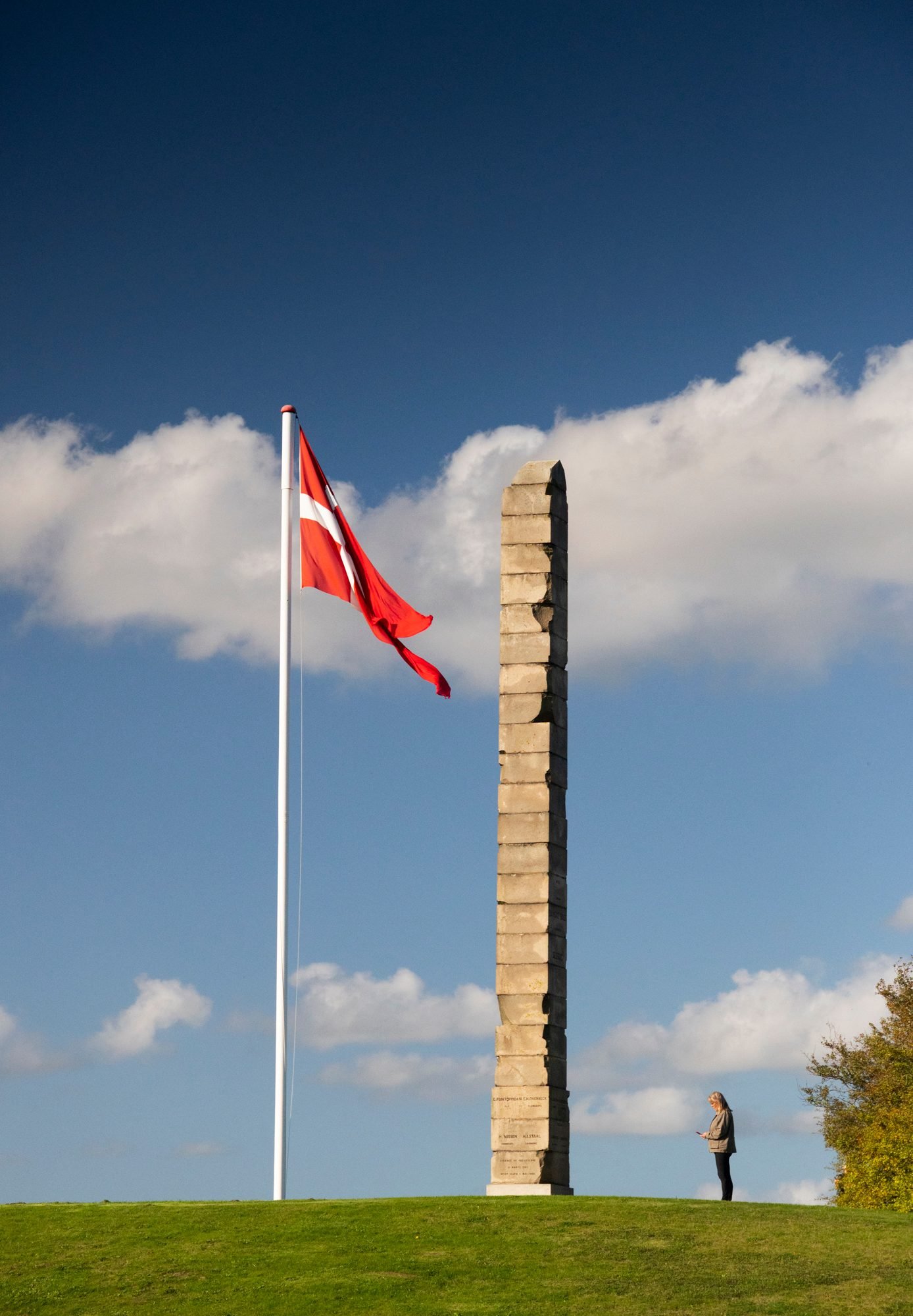
The memorial column from 1863 and the swallow-tailed Danish flag, raised every day on Denmark’s highest flagpole.
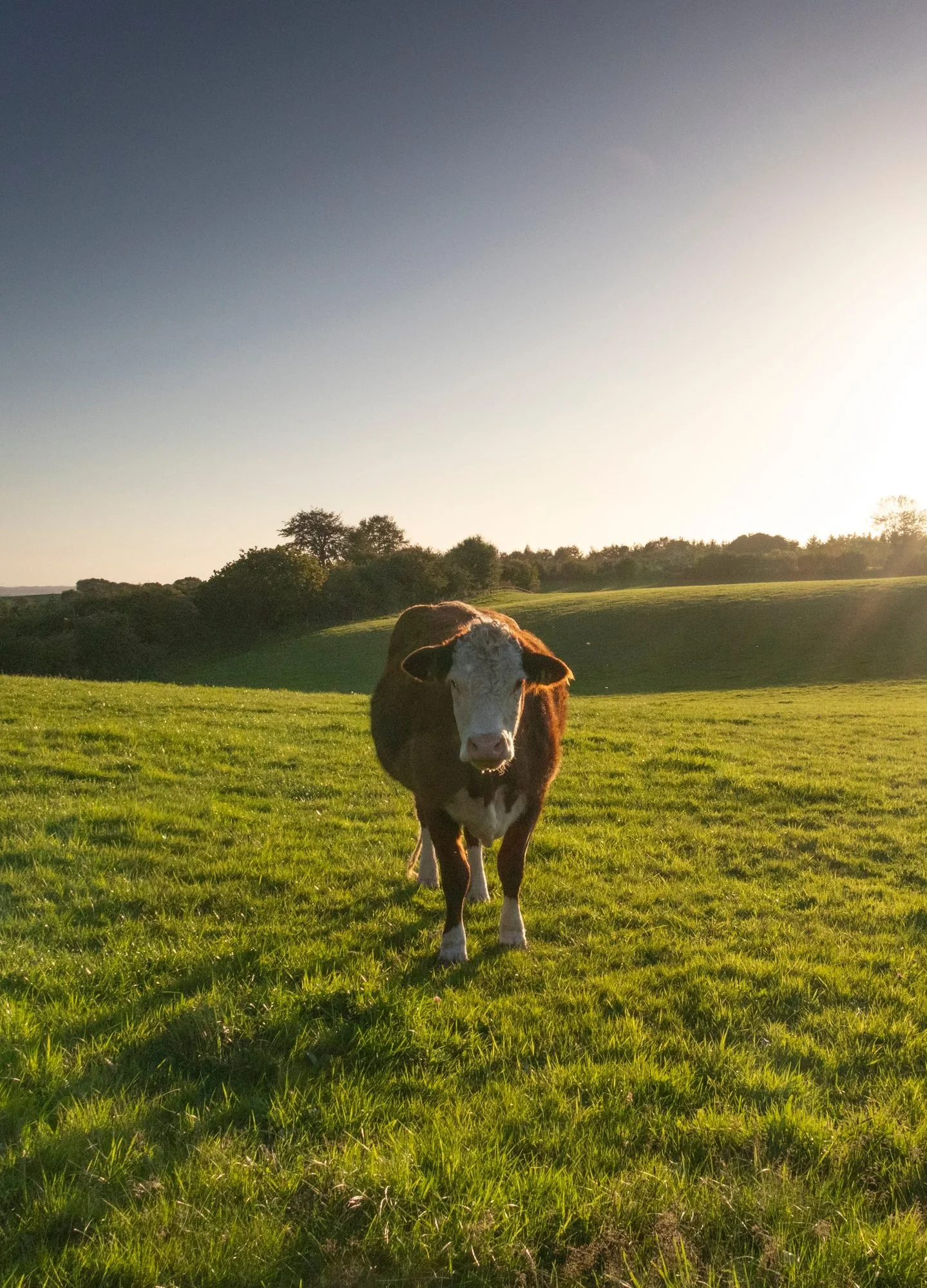
Golden hour with a grazing cow at Skamlingsbanken.
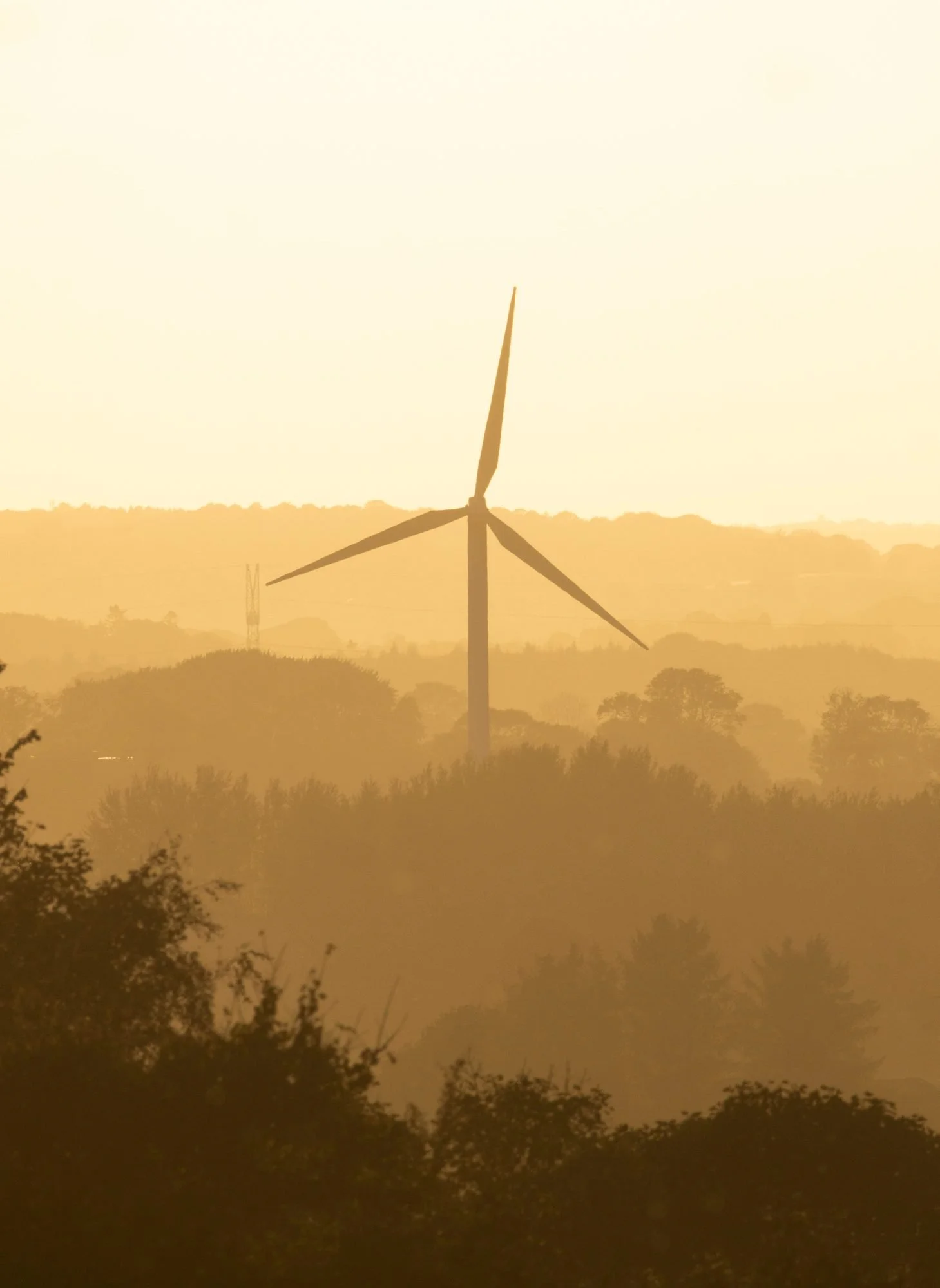
Hazy hills and wind turbines fading towards the horizon.
A quiet morning by the water
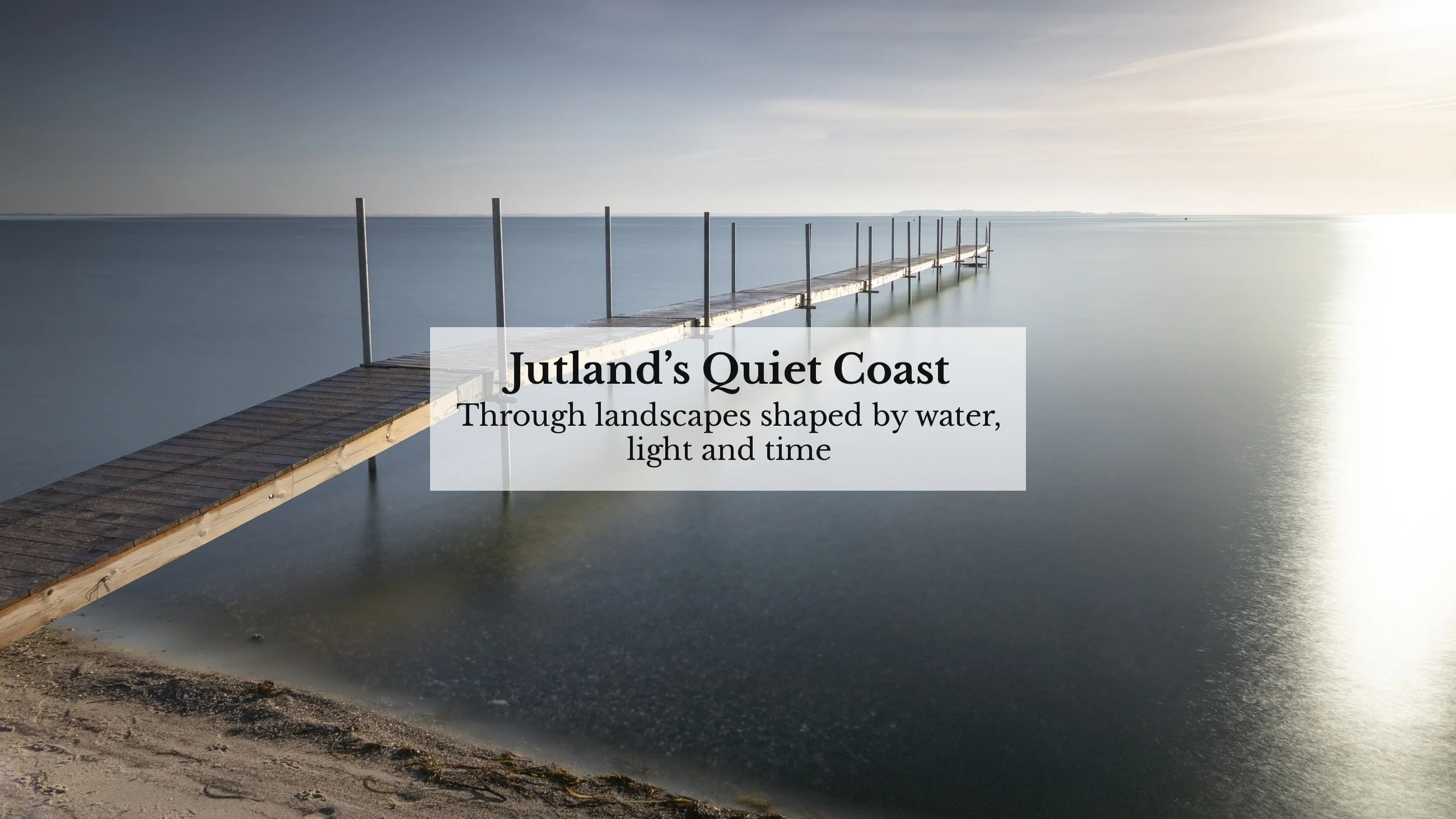
On my last morning, mist was hanging low over the fields at sunrise. I ended at the calm waters of Hejlsminde Strand, with its long jetty and small harbour. Total silence, only the sound of water. It was the perfect way to say goodbye to Jutland’s quiet coast.
Curious about more quiet corners of Denmark? Read my blog about exploring the island of Ærø.
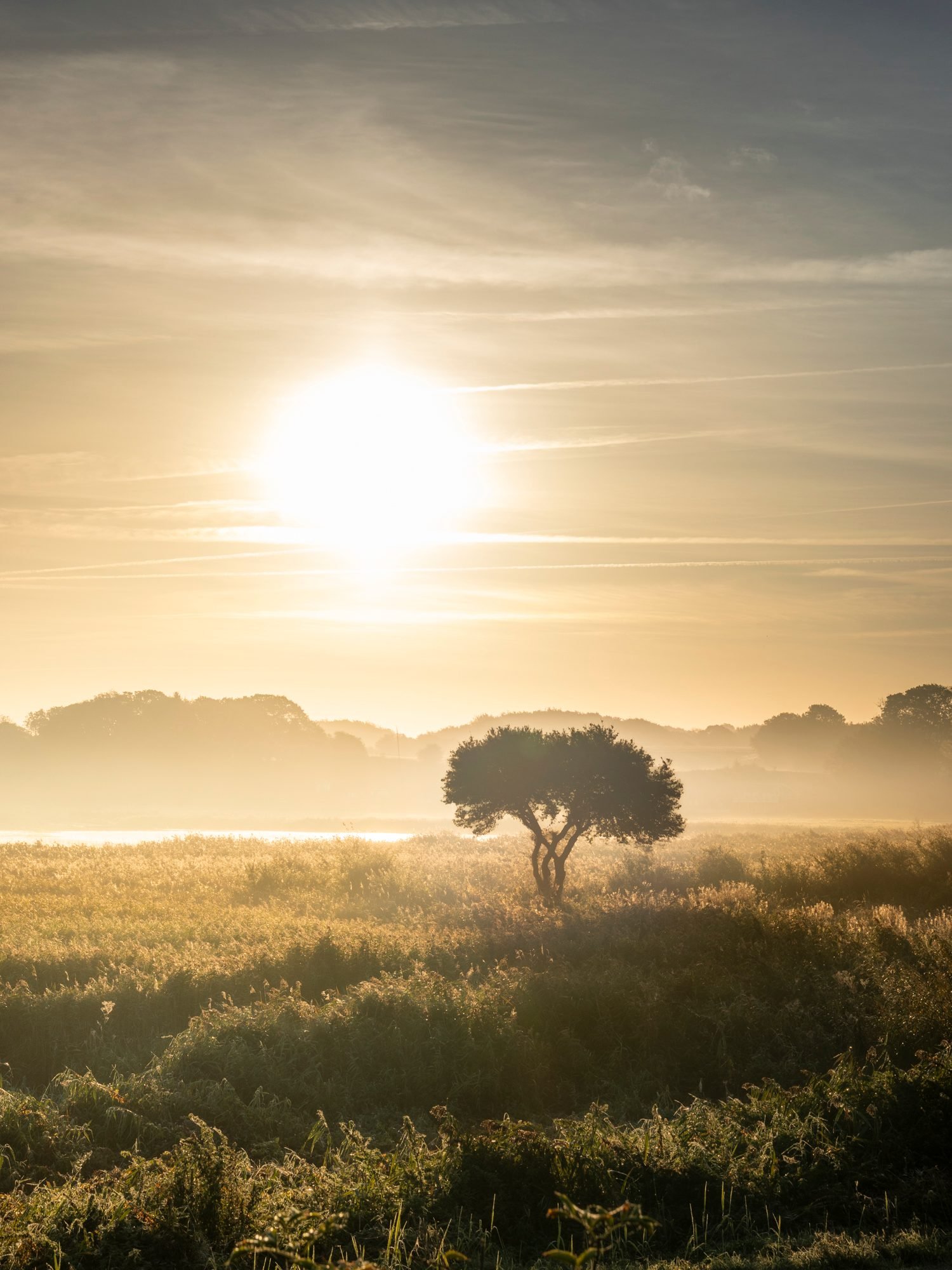
Mist hanging low over the fields at sunrise.
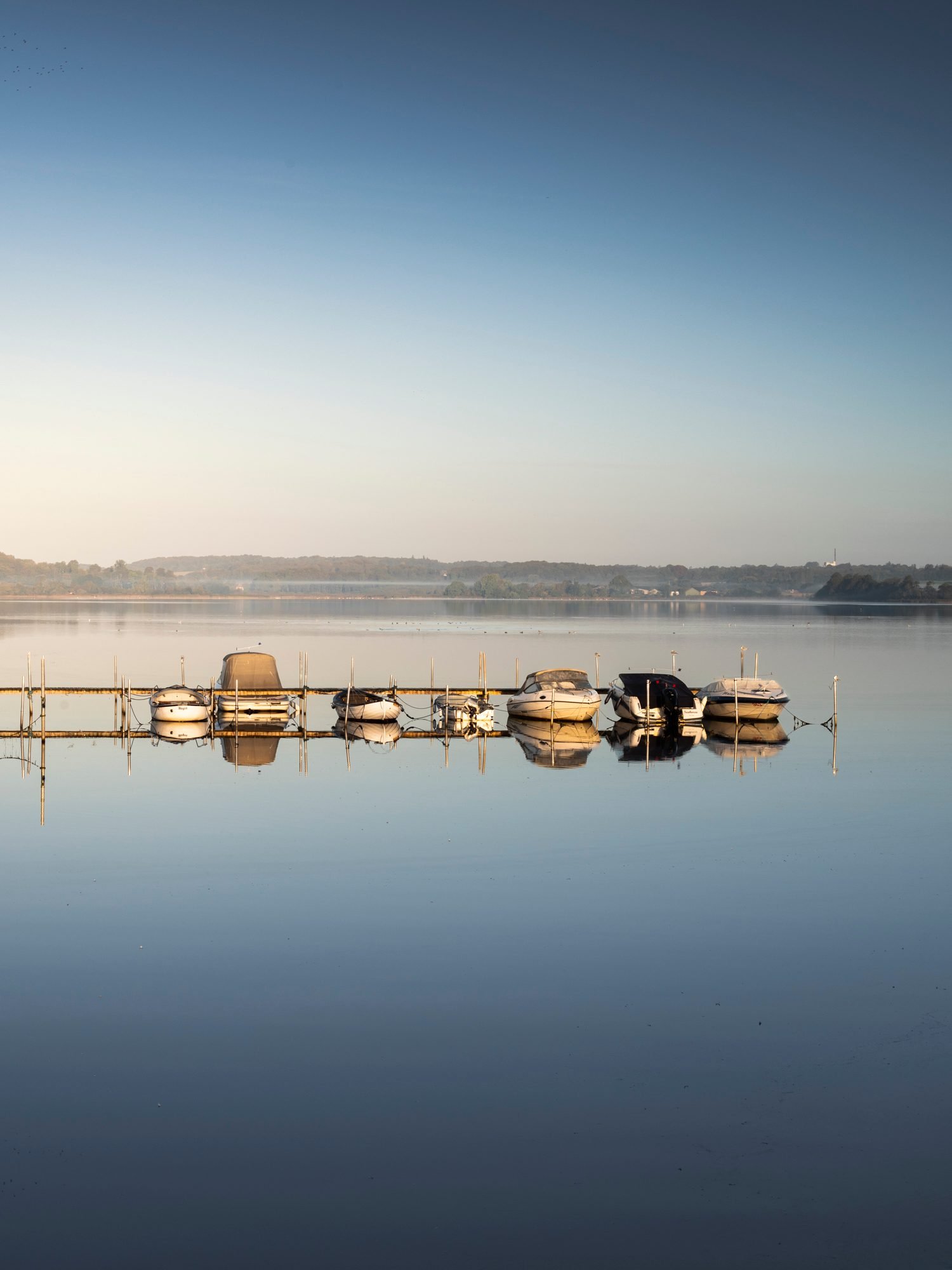
A calm, blue morning at Hejlsminde.
I would like to extend a huge thank you to Destination Trekantområdet (The Heart of Jutland), Destination Kystlandet, Destination Sønderjylland and VisitDenmark for the many wonderful recommendations and for giving me the opportunity to explore this beautiful part of Denmark. Would you like to plan your own trip? You can find more inspiration on visitdenmark.com.